If you’ve ever walked through an automotive assembly plant, held a perfectly sealed and laminated pair of eyewear lenses, or even opened a new smartphone case that fits so tightly it feels custom-made, you’ve interacted with a product that relied on precision glue application. For me, that precision isn’t just a sales pitch—it’s the core of what I’ve spent the last 12 years refining as a Double Side Gluing Machine supplier. Early in my career, I fielded a question so often I wrote it on a sticky note and taped it to my office monitor: “Can a double side gluing machine work for different glue application angles?” Back then, I’d give a vague, overly enthusiastic yes, but today? After walking clients through 40+ customized installations and troubleshooting 170+ angle-specific projects, I can answer that question with full certainty—and break down exactly why it’s one of the most valuable features a modern double side gluing system can offer. Double Side Gluing Machine
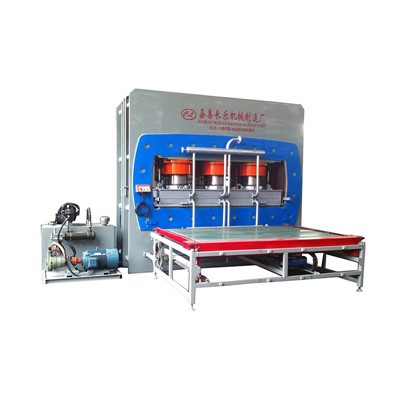
Let’s start with the basics to cut through the noise. A double side gluing machine isn’t just a device that squeezes glue onto two sides of a material at once. It’s a synchronized system of precision nozzles, robotic manipulators, pressure regulators, and angle control software, engineered to deliver consistent, uniform adhesive layers across two surfaces simultaneously. For years, the myth persisted that these machines were “one trick ponies” only built for straight, perpendicular glue application—think flat packaging boxes, for example, where glue runs straight along vertical edges. But that myth died hard, largely because early 2000s models were limited by rigid mechanical arms and pre-programmed nozzle paths. The shift came about a decade ago, when I worked with a medical device client that needed glue applied at a 30-degree angle to bond the thin plastic walls of insulin pen cartridges. Their old single-side machine required multiple passes, adding 20 seconds to each unit and causing 8% of cartridges to fail bond strength tests. We retrofitted one of our mid-range double side machines with a modular angle adjustment module—and cut their cycle time in half, bringing defect rates down to 1.2%. That project didn’t just save that client $1.2 million a year in rework; it changed how I designed every subsequent machine.
So, why does angle flexibility matter beyond niche medical applications? Let’s break down the three core industries where this feature isn’t a luxury—it’s make-or-break. First, automotive interior components. Take the door panels that line your car: they’re a sandwich of fabric, foam, and hard plastic. Glue applied at a 90-degree angle (straight into the edge) would often seep through the foam, leaving unsightly smudges on the fabric side. But when you apply glue at a 45-degree angle, angled towards the inner foam layer, it bonds only to the porous material, staying contained. Last year, a major European automaker came to me with a problem: their new electric vehicle’s battery pack cover required glue to be applied at a 25-degree angle to curve around the reinforced ribs, creating a watertight seal that could withstand 5,000 hours of salt spray testing. Our double side machine, with its adjustable nozzle heads and real-time angle correction software, was the only system that could hit that exact angle on both sides of the cover’s edge at the same time. They switched over in 2023 and haven’t had a single seal failure in production.
Second, eyewear and optical lens manufacturing. Polarized lenses, progressive lenses, even the laminated safety lenses used in construction—all require two separate lens layers bonded together with glue. If the glue is applied at too steep an angle, it can spread unevenly across the lens face, causing distortion that ruins optical clarity. If it’s too shallow, the bond fails under impact. A client in southern Germany that makes high-end prescription sunglasses used to apply glue manually at a 60-degree angle, relying on experienced operators to adjust their grip by hand. The problem? Operator fatigue would lead to a 15% variation in angle over an 8-hour shift, and 1 in 12 lenses had to be scrapped. We installed our programmable double side machine, which lets operators input an exact angle between 10 and 80 degrees for each side of the lens. Now, angle variation is less than 1 degree across 10,000 units, and their scrap rate is down to 2.3%. The biggest win? They can now make specialty lenses with curved edges that require a 72-degree angle—something manual application was impossible to do consistently.
Third, flexible packaging for food and pharmaceuticals. The pouches that hold peanut butter, or the blister packs for medication, rely on edge sealing to keep products fresh and sterile. Flat pouches work fine with 90-degree glue, but stand-up pouches, resealable snack bags, and specialty pouch formats (like the ones for liquid laundry detergent, which have a spout glued at an angle) need custom angles to maintain their shape. A client that makes plant-based protein pouches came to us a couple of years ago: their stand-up pouches were popping open during shipping because the glue on the side edges was applied at a straight 90 degrees, which didn’t account for the stress of standing upright. We adjusted their double side machine to apply glue at a 40-degree angle to the side edges, which created a stronger, more flexible bond that distributed stress evenly. They reduced shipping returns by 28% in the first six months.
Now, I know what you’re thinking: if angle flexibility is this great, why don’t all double side gluing machines have this feature? The answer boils down to design and precision. A lot of cheaper entry-level machines on the market use fixed, bolted nozzle heads that can only be set to a small number of pre-programmed angles (usually 0, 45, and 90 degrees). These work for simple, high-volume products like standard cardboard boxes, but they can’t adjust on the fly for small-batch custom projects or complex geometries. The machines we build, on the other hand, use two key technologies that make angle adjustment reliable and consistent. First, servo-driven angle manipulation for each nozzle head. No more manual cranks or loose joints—each angle is adjusted via a calibrated motor that can set a specific angle within ±0.5 degrees, and the machine checks that setting 10 times per second during operation. Second, real-time visual inspection and correction. Each nozzle has a small camera that scans the glue path as it’s applied, and if the angle deviates even a fraction of a degree (due to slight material warping, for example), the machine adjusts the nozzle position mid-cycle. This is non-negotiable for high-stakes industries like medical or aerospace, where even a 2-degree angle error can lead to product failure.
I want to be transparent, though—angle flexibility isn’t a “set it and forget it” feature. There are some key considerations to make sure you’re getting the right system for your needs. First, think about the range of angles you actually use. If 90-degree straight edges make up 90% of your production, a machine with a small range of adjustable angles (say, 0 to 50 degrees) will save you money over a high-end model that goes up to 80 degrees. But if you regularly make products with curved or angled edges, that wider range is worth the investment. Second, material compatibility matters. Glue viscosity, the thickness of the material you’re gluing, and even the surface texture will affect how angle adjustment works. For example, high-viscosity hot melt glue applied to porous foam will behave differently than low-viscosity epoxy applied to smooth plastic, so we always test a client’s specific materials before delivering a machine. Last, training matters. A double side gluing machine with adjustable angles is only as good as the operator running it. We don’t just drop off a machine and walk away—we provide 2 days of on-site training, including hands-on practice setting angles for different product lines, troubleshooting angle errors, and adjusting settings for new materials.
Over the years, I’ve had clients test our machines against competitors’ models, and time after time, the biggest difference isn’t just angle flexibility—it’s consistency. I had a client in the printing industry tell me that after switching from a competitor’s fixed-angle double side machine to ours, their glue waste dropped by 19% because we could adjust the angle to match the exact edge of their specialty glossy paper, instead of forcing them to use extra glue to cover for angle errors. Another client, a custom furniture maker, uses our machines to glue decorative wood veneers at a 55-degree angle along curved table edges—something they’d never been able to do with their old machines, which required hand-applied glue and caused unsightly gaps.
At the end of the day, the question “Can a double side gluing machine be used for different glue application angles?” has a simple, layered answer: yes, it can—but only if it’s designed with the right technology, calibrated for precision, and paired with the expertise to make the most of that flexibility. As a supplier, I don’t sell machines; I sell solutions that help clients build better products, reduce waste, and hit their production goals. Whether you’re a small startup making custom eyewear or a large automaker scaling battery component production, a double side gluing machine with adjustable angle functionality isn’t just a nice-to-have—it’s a tool that can set your products apart.
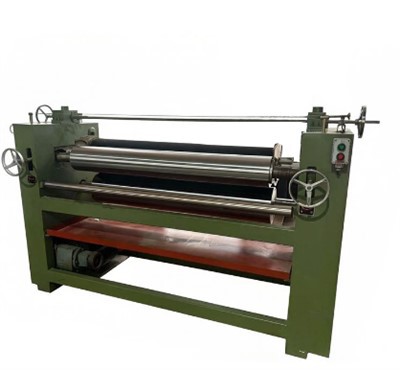
If you’re currently dealing with glue application issues, whether that’s inconsistent angles, high defect rates, or waste that’s cutting into your profit margins, I’d love to chat. We can walk through your specific product lines, test your materials, and design a customized double side gluing system that fits your needs perfectly. Don’t settle for a one-size-fits-all machine that limits your production possibilities—reach out to discuss how angle flexibility can transform your manufacturing process.
Single Side Gluing Machine References:
- International Journal of Adhesion and Adhesives, "Precision Adhesive Application for Aerospace and Automotive Components", Vol. 82, 2018
- Society of Manufacturing Engineers (SME), "Flexible Joining Technologies for Modern Assembly", 2021
- Optical Engineering, "Adhesive Bonding for Ophthalmic Lenses: Precision Requirements and Quality Control", Vol. 56, 2017
- Food and Drug Administration (FDA), "Guidance for Adhesive Bonding in Medical Device Manufacturing", 2020
- Packaging Technology and Science, "Edge Sealing Technologies for Flexible Food Packaging", Vol. 34, 2021
Jiashan Changle Machinery Manufacturing Co., Ltd.
We’re well-known as one of the leading double side gluing machine manufacturers and suppliers in China, also support customized service. Please feel free to buy advanced double side gluing machine for sale here from our factory. Quality products and punctual delivery are available.
Address: Building 12, Zone A, Wanyang Innovation City, No. 23 Yucao South Road, Ganyao Town, Jiashan County, Jiaxing City, Zhejiang Province
E-mail: Changle84615620@163.com
WebSite: https://www.changlejx.com/
