If you’ve ever stared at a pile of sinus equipment accessories—cannulas, irrigation tips, specula, you name it—wondering if that new part will work with your sinuscope, you’re not alone. As someone who’s spent the last 8 years running a small, specialized sinuscope accessories supply business, I’ve lost count of how many times a customer has emailed panicking, saying, “I ordered this tip, and now it won’t fit my scope.” Most of the time, the problem isn’t a faulty part—it’s just not checking compatibility the right way. Back when I started, I’d wing it too, guessing based on brand labels or vague product descriptions. Now, I’ve built a process that’s saved hundreds of us from wasted time, money, and frustrated patients, and I want to share it with you. This isn’t rocket science, but it’s the kind of practical, science-backed steps that keep your sinus procedures smooth and your inventory (or your practice, if you’re a clinician) on track. Sinuscope Accessories
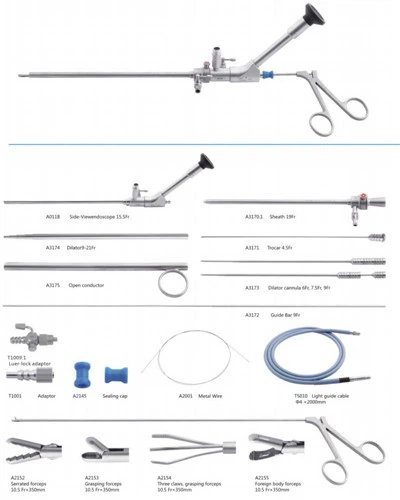
First, let’s start with the non-negotiable: know your sinuscope model like the back of your hand. I can’t tell you how many times someone tells me, “It’s a mid-2019 model,” and that’s not enough. Sinuscopes (and their accessories) have tiny, precise specs that change even between sub-models, and manufacturers like Olympus, Karl Storz, and Wolf— the three big names in the game—don’t always make that easy. Last year, a clinic bought a set of irrigation cannulas they swore were for their Olympus model, only to find they fit the same line’s “Classic” version but not their newer “HD+” variant, which had a slightly smaller operating channel. That’s the kind of mix-up that costs thousands in reorders and delays patient care. So step one: pull up your sinuscope’s user manual, or check the label on the scope itself (it’s usually on the handle or the control head, small, but there). Jot down three key numbers: the outer diameter of the working channel, the inner diameter of the port where accessories attach, and the model’s specific variant code—like “Olympus ENF-V3” or “Karl Storz 11272VA.” Don’t just rely on the serial number, though; some manufacturers rework models mid-production without changing the serial number, so the variant code is non-negotiable.
Once you have those numbers, the next step is to match them to accessory specs—but not just any specs. A lot of off-brand accessories list “compatible with all Olympus scopes” and that’s a red flag for me, and for most clinic managers I work with. The reason that’s a red flag is because of tolerances. Sinus accessories have to fit tight enough to avoid leaks during irrigation, but not so tight that they scratch the scope’s channel or get stuck mid-procedure. Medical device standards (specifically ISO 10993, the global standard for biocompatibility for medical devices, and ISO 13485 for quality management systems) set tolerance ranges for these parts, and every manufacturer—even the big ones—sticks to those, but small deviations happen between model lines. For example, an irrigation tip that’s rated for a 2.1mm working channel will work in a 2.05mm channel (since that’s within the ISO tolerance), but not a 2.3mm channel. That’s why cross-referencing the accessory’s exact working channel rating with your scope’s exact channel measurement is critical. When we manufacture our own accessories, we test every single part to make sure it falls right in the middle of that tolerance range—no too-big, no too-small—because we know how bad a stuck cannula mid-surgery is.
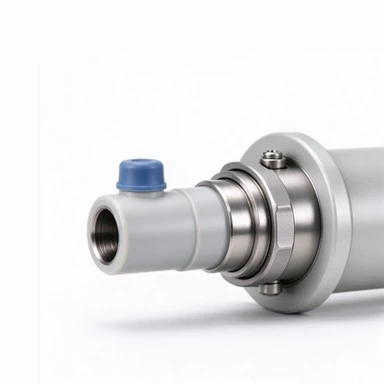
Another thing I always tell customers to check is the locking mechanism. This is a detail most people overlook, but it’s one of the most common causes of incompatibility. Sinuscope accessories lock in two main ways: twist-lock and push-fit. Twist-lock parts have a small notch or slot on the connector that lines up with a matching pin on the scope’s port, and you twist it 90 degrees to secure it. Push-fit parts just slide into the port and lock with a tiny rubber o-ring or a spring-loaded clip. The problem? Some model lines use different slot widths or pin placements. For example, Karl Storz’s 2020 “New Gen” scopes use a slightly wider twist-lock slot than their 2018 “Classic” line, so an accessory made for the Classic line won’t click into the New Gen scope—even if the diameter is perfect. Last month, I had a pediatric ENT clinic reach out because they’d ordered a set of small specula for their scope, and they just pushed right through the port instead of locking. It turned out the specula were twist-lock, and their scope was push-fit. They didn’t check the locking mechanism, and it cost them a day’s worth of procedures. To avoid that, look at the port on your scope: is there a small notch? That’s twist-lock. If it’s just a smooth opening with a tiny rubber ring, that’s push-fit. Then check the product description of the accessory—any reputable seller (including us) will list the locking mechanism clearly, right alongside the channel diameter.
If you’re still not sure after checking specs and locking mechanisms, the next step is a simple, low-risk test you can do at your office. I always recommend this to first-time buyers, because even the best cross-referencing can miss a tiny detail. First, grab a disposable dummy guide—wait, no, better: if you have an old, unused accessory from a compatible model, or even a sterile plain swab (as long as it’s not frayed) that fits loosely in the channel, use that as a placeholder. Wait, no, here’s the actual test I teach: take the accessory you want to test, and gently insert it into the port, no force. If it slides in easily without wiggling too much, that’s a good sign. If it feels too loose (you can spin it around easily) or too tight (you have to push hard, and it scrapes the inner wall of the port), it’s incompatible. Then, for locking parts, apply a little light pressure—if it locks with a distinct click, and doesn’t move when you tug gently, it’s good. If it doesn’t click, or it falls right out, it’s not right. I always stress no force here—forcing a part can scratch the scope’s inner channel, which is a huge deal because scratched channels can damage delicate sinus tissue and make the scope inaccurate. I’ve seen a clinic pay $5,000 to repair a sinuscope because they forced an incompatible cannula in, and that’s a mistake I never want anyone to make.
Now, let’s talk about common myths that trip people up. First myth: brand-name accessories are always compatible with brand-name scopes. No, that’s not true. Like I said earlier, Olympus has different variant lines, and a tip for their ENF-V2 won’t work for their newer ENF-V4, even though they’re the same brand. Second myth: all accessories with the same diameter number are compatible. Nope, as I mentioned, tolerances vary, and locking mechanisms change. Third myth: used accessories are fine to cross-compare. I’d avoid that, honestly, because used parts can have worn connectors— a used cannula that fit a scope perfectly six months ago might have a bent tip or a stretched connector that won’t work now. If you’re comparing used parts, only compare ones that are in new, unused condition, and even then, double-check all specs.
Another big thing I wish more people considered is clinical use. Wait, how does that tie into compatibility? Let’s say you’re a rhinologist who does a lot of pediatric sinus procedures. You need smaller, more flexible specula that fit a narrower working channel, but if you order adult-sized specula that list a larger channel, even if they fit the diameter, they’ll be too big for a kid’s nostril, and that’s a problem. Or, if you do a lot of saline irrigation, you need cannulas that have a specific flow rate, and that’s tied to the tip diameter and hole size—so even if a cannula fits the channel, if the flow rate is wrong, it won’t work for your procedure. For example, our standard irrigation cannulas have a 0.5mL/sec flow rate at 30PSI, which is perfect for most adult procedures, but our pediatric line has a 0.2mL/sec flow rate to avoid damaging delicate tissue. That’s a form of compatibility too—clinical compatibility, not just mechanical. I always ask customers to tell me what procedures they use the accessory for, because that changes which specs they need to prioritize.
Let me give you a real example to tie all this together. Last quarter, a large ENT group in Texas reached out, saying they’d bought a case of irrigation cannulas from a big online seller, and half of them wouldn’t work with their Karl Storz 11272VA scopes. They’d ordered them based on “Karl Storz compatible” on the listing, and that was it. They sent me photos of the cannulas and their scope, and I walked them through the steps. First, we checked their scope’s specs: 2.0mm working channel, twist-lock mechanism. Then we checked the cannula listing: it said “2.0mm channel, compatible with all Karl Storz scopes.” Wait, but it didn’t list the variant code. A quick cross-check with Karl Storz’s official docs showed that the 11272VA uses a 2.0mm channel with a 5mm twist-lock slot, while the cannula they bought was made for the older 11271 model, which had a 4.8mm slot. That’s why it wouldn’t lock. We sent them our own cannulas, which are made specifically for the 11272VA, with the exact slot size, and they’ve used them without a single issue since. That’s the kind of thing that happens when you skip the details.
Now, let’s talk about where to get reliable info, because not all sellers are equal. A lot of online marketplaces have vague listings, but reputable sellers (like ours, obviously) will list exact model compatibility, channel specs, locking mechanism, and even clinical use cases. The official manufacturer’s website for your sinuscope is also a great resource—they usually have a list of approved accessories for each model, and that’s a great reference, though I will say that generic accessories can be just as compatible as brand-name, as long as you check the specs. Wait, but I’d caution against no-name sellers that don’t list exact specs. If a listing just says “compatible with Olympus sinuscopes” and doesn’t give a model or channel size, that’s a sign to look elsewhere. We make sure every single one of our accessory listings has all the specs you need, and we offer a free compatibility check for anyone who’s unsure—just send us your model number, and we’ll confirm if our parts work for you.
At the end of the day, checking accessory compatibility is about being specific, not general. It’s about not assuming that a brand or a vague label is enough, and taking the extra 5 minutes to check the model code, channel diameter, locking mechanism, and do the simple fit test. I’ve been in this business long enough to know that small details make all the difference—for your procedures, for your patients, and for your bottom line. Wasting money on incompatible parts isn’t just a hassle; it’s a risk to patient safety, which is why we built our business around making compatible accessories easy to identify and source.
If you’re still unsure about whether a specific accessory works with your sinuscope, or if you need help verifying specs for your model, don’t hesitate to reach out. We’re here to answer questions, walk through compatibility checks, and make sure you get parts that work the first time, every time. No more guesswork, no more wasted orders, no more delayed procedures. We care about sinus care as much as you do, and that starts with parts that fit.
Surgical System References:
- International Organization for Standardization. (2019). ISO 10993: Biological evaluation of medical devices. Geneva, Switzerland: ISO.
- International Organization for Standardization. (2018). ISO 13485: Medical devices – Quality management systems – Requirements for regulatory purposes. Geneva, Switzerland: ISO.
- Olympus Corporation. (2022). ENF-V Series Sinuscope User Manual. Tokyo, Japan: Olympus Medical Systems.
- Karl Storz GmbH & Co. KG. (2021). 11272VA Sinuscope Technical Specifications. Tuttlingen, Germany: Karl Storz Endoscopy.
- American Academy of Otolaryngology–Head and Neck Surgery. (2020). Clinical Practice Guideline: Adult Sinusitis. Alexandria, VA: AAO-HNS.
Zhejiang Jiacheng Medical Instrument Co., Ltd.
Zhejiang Jiacheng Medical Instrument Co., Ltd. is well-known as one of the leading sinuscope accessories manufacturers and suppliers in China, specialized in providing high quality customized service to global clients. Please feel free to buy discount sinuscope accessories from our factory. Contact us for more details.
Address: Building 8, Shutai·Fuchun Innovation Park, No.516, Majia Road, Fengchuan Subdistrict, Tonglu County, Hangzhou, Zhejiang Province, China
E-mail: Ken.huangfu@jiachengmedical.com
WebSite: https://www.jiachengmedical.com/
