If you’ve ever walked through a paper converting plant, watched as large parent rolls of cardboard, uncoated newsprint, or specialty label paper get sliced into narrower, usable rolls—whether for grocery bag stock, office copy paper, or food packaging—you might not notice the quiet workhorse holding the whole process together: the tension controller. Most slitting machine operators focus on sharp, precise slitter blades, how fast the line runs, or how neatly the finished rolls wind, but skip over the component that prevents 90% of the waste, downtime, and uneven edges that sink slitting jobs. As a paper slitting machine supplier who’s walked hundreds of plant floors and fielded thousands of questions from operators and production managers, let me break down why tension controllers aren’t just a “nice add-on”—they’re non-negotiable for consistent, profitable slitting. Paper Slitting Machine
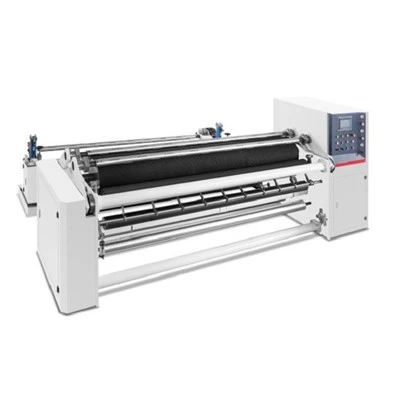
First, let’s ground this in what slitting actually does: when a 60-inch-wide parent roll of paper comes off a mill, it can weigh 2,000 pounds or more. To turn that into rolls that fit a copier, a retail checkout receipt printer, or a bag machine, you have to feed that paper through slitting knives, wind the narrow strips onto new cores, and make sure every strip stays tight, flat, and the same length from start to finish. Tension is the force that keeps the paper under controlled stress through every step of this journey. Without a tension controller, you’re not just guessing at that force—you’re leaving it to luck.
I see this all the time with new customers who try to skimp on their slitting line setup. They’ll buy a base slitting machine with manual tension brakes, which work okay for thin, low-stress materials like light copy paper, but hit a wall when they move to thicker paper (like 14-point cardboard for cereal boxes) or specialty grades with variable stretch. Let’s use a common example: a customer once called me in a panic, saying their slitting line was ruining 15% of their 1,000-pound parent rolls. The problem? Their old line used a simple mechanical brake that applied constant tension, no matter how the material behaved. When the cardboard heated up as it ran through the line (even a small 5-degree change can shift paper’s stretch properties), the brake either pulled too hard, stretching the paper thin and causing it to snap mid-run, or too loose, letting the strip wrinkle before it even hit the slitter. That’s where a tension controller steps in: it’s a closed-loop system that adjusts the tension in real time, matching the force to the material’s current behavior, speed, and position on the line.
Let’s get specific about the three core roles a tension controller plays in paper slitting—roles I’ve tested myself on our demo lines, so I don’t just talk theory. First, it maintains uniform tension across all slitted strips at every stage of the line. Slitting lines don’t just have slitter knives and winders; they have unwind stands (where the parent roll sits), dancer rolls (the weighted rollers that move up and down to signal tension changes), and rewind shafts (where the finished narrow rolls wind). Each of these stages needs a different tension: for thin paper, unwind tension might be 5 pounds per inch of width, while rewind tension for a heavy box board might be 12 pounds per inch. A good tension controller doesn’t just set a number—it tracks the dancer roll’s position 100 times per second, adjusts the brake or motor on the unwind or rewind to keep the dancer centered, and makes sure every strip between the slitter and rewind gets the exact tension it needs. I’ve seen a customer go from 12% edge damage to 1% after swapping a manual brake for a closed-loop tension controller—those 11 percentage points add up to thousands in saved material every month.
Second, a tension controller prevents defects that kill product quality. Even small defects in slitted paper can make a finished product unfit for sale. Wrinkles from too-loose tension, for example, ruin label stock, because labels won’t adhere flat to bottles. Bag paper with uneven tension can tear at the seams when a customer loads groceries. And for specialty materials like photo paper or medical-grade packaging, even a tiny stretch from over-tension can change the coating’s properties, rendering the product useless. I once worked with a medical packaging plant that was failing FDA inspections because their slitted rolls had inconsistent tension, leading to pinholes in the packaging that were supposed to be hermetic. After installing a tension controller, their defect rate dropped to zero within two runs, and they passed their next inspection with no issues. That’s not just about efficiency—it’s about compliance for regulated industries, which is a big part of what our slitting machines are designed to support.
Third, a tension controller boosts line speed and reduces downtime, which is the biggest cost driver in any converting operation. When you’re running a slitting line at 500 feet per minute (which is standard for high-volume jobs), you can’t stop every time a strip snaps or a roll wrinkles. Manual tension systems require an operator to adjust a brake knob every time the material changes, which means slowing the line down, wasting time, and risking errors. A tension controller, though, uses sensors (like load cells on the dancer rolls or encoders on the shafts) to adjust on the fly—no operator input needed. That means you can run the line faster, with fewer stops, and take on more jobs in a single shift. I’ve had customers tell me that adding a tension controller to their slitting line let them cut their run time per roll by 25%, because they didn’t have to pause to fix tension-related issues. For a plant running 100 rolls a week, that’s 25 extra rolls of usable product they can sell—pure profit.
Now, let’s talk about what sets a good tension controller apart from a cheap one, because not all of them are built for paper slitting. A lot of suppliers sell generic tension controllers designed for film or metal, which don’t account for paper’s unique properties: paper is porous, has natural variations in stretch, and can be affected by humidity in the plant. A paper-specific tension controller will have settings for different paper grades (from newsprint to thick cardboard), account for humidity changes automatically, and integrate with the rest of the slitting machine’s controls—like the slitter blade alignment system, so if the blade shifts, the controller adjusts tension to keep the strip flat. I’ve seen customers try to use film-grade controllers, only to realize that paper needs a slower response time than film, because it can’t handle sudden tension spikes without tearing. That’s why at our slitting machine facilities, we spec tension controllers that are calibrated specifically for paper, with adjustable response rates for different material thicknesses.
I also want to address a common misconception: some operators think that if they run a lower-quality parent roll, they can get away with a cheaper tension controller. That’s backwards. Lower-grade paper has more natural variations in thickness and stretch, so it needs a more precise tension controller to keep up. A high-quality parent roll from a mill might have consistent properties, so a basic controller could work, but it’s still going to leave efficiency on the table. I worked with a plant that ran mostly 100# stock from a mid-tier mill; they added a mid-range tension controller and saw a 10% reduction in waste, even though their parent rolls were good. When they switched to a higher-grade controller for their specialty label jobs, that waste dropped another 7%. So it’s not just about the material—it’s about the job you’re trying to do.
Let’s also cover a real-world example that I witnessed last year, to put this all in perspective. A small folding carton plant in Ohio was struggling with a new job: slitting 24-inch-wide rolls of 16-point board into 12-inch and 8-inch rolls for cereal boxes. Their old slitting line had a manual tension system, and they were getting 18% waste on the job—mostly edge tears and wrinkled ends. They brought in our team to audit their line, and we noticed they were running the unwind tension at 10 pounds per inch, which was too high for the 16-point board, and they had to adjust it twice every roll because the board’s stretch changed as it ran through the line. We recommended adding a closed-loop, paper-specific tension controller calibrated for 16-point cardboard. After the installation, their waste on the same job dropped to 2%, they ran the line 30% faster, and they were able to take on two more jobs a month that they’d previously turned away because their line couldn’t handle the speed. That’s the kind of impact a tension controller has, beyond just fixing defects.
Now, I’ll be honest: there are places where you can cut corners on a slitting machine, but the tension controller isn’t one of them. I’ve seen plants save a few thousand dollars by skipping a quality tension controller, only to lose tens of thousands in waste, downtime, and lost orders. Paper slitting is all about precision—precision in blade alignment, precision in speed, and precision in tension. The controller is the piece that ties all those together, making sure the paper doesn’t tear, wrinkle, or stretch unevenly at any point.
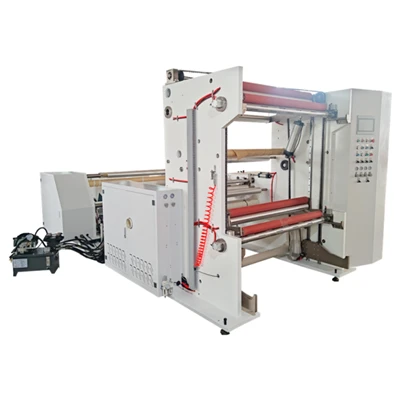
If you’re running a paper slitting operation and dealing with too much waste, slow line speeds, or inconsistent product quality, don’t dismiss the tension controller as a minor component. It’s the backbone of your slitting line, and getting the right one can transform your bottom line. If you’re ready to upgrade your slitting machine or add a tension controller to your existing setup, reach out to our team to discuss your specific needs—whether you’re running newsprint, box board, label stock, or specialty paper. We’ll help you find the right solution to cut waste, speed up runs, and improve the quality of your finished product.
Paper Rewinder Machine References
- Converting Magazine, “Tension Control Fundamentals for Web Processing,” 2021
- Paper Converting Machine Manufacturers Association, “Best Practices for Slitting Paper,” 2022
- ISO 15311, “Paper and Board—Guidelines for Converting Processes,” 2020
Wenzhou Sanhui Machinery Manufacturing Co., Ltd.
Wenzhou Sanhui Machinery Manufacturing Co., Ltd. is one of the most professional paper slitting machine manufacturers and suppliers in China. We have world-leading production equipment and strong manufacturing capabilities. Please feel free to wholesale advanced paper slitting machine made in China here from our factory. Customized orders are welcome.
Address: B17-8, Mechanical Industry Park, Wanquan Light Industry Production Base, Wanquan Town, Pingyang County, Wenzhou City, Zhejiang Province
E-mail: sanhui.slittingmachine@gmail.com
WebSite: https://www.sanhuislittingmachine.com/
