If you’re running a steel billet reheating furnace and thinking about switching fuel types—say, moving from heavy fuel oil (HFO) or coal to natural gas, or even to a cleaner, cheaper option like propane—you’re not alone. Most of our clients come to us mid-project, frustrated with fuel costs, emissions rules, or inconsistent supply, and wondering how to pull off the conversion without shutting down their mill for months. As a steel billet reheating furnace supplier, we’ve done dozens of these conversions, and let’s be real: it’s not just swapping a burner. It’s a deep dive into your furnace’s specs, your operation, and the small details that make or break performance. We’re gonna break this down like we’d walk a new client through it—no jargon, just what actually works. Steel Billet Reheating Furnace

First off, let’s get the basics right: why are you converting? Don’t skip this step, because it changes every decision. If you’re switching to comply with local emissions rules (like cutting NOx or particulate matter), you’ll prioritize low-NOx burners and exhaust systems. If it’s to save cash on fuel, you’ll compare BTU per dollar, fuel delivery costs, and maintenance for the new fuel. For example, a client last year was burning coal and paying 30% more in maintenance because coal left ash buildup in the furnace tubes. Swapping to natural gas cut their maintenance costs by 22% and their emissions by 45%—that’s the stuff that makes the call worth it.
Once you’ve nailed the “why,” the first real step is a full audit of your existing furnace. We don’t just look at the burners here. We measure your furnace’s capacity, the heat profile you need (billets need specific temps—usually 1100-1250°C for rolling), your exhaust system’s size, and even your electrical supply if you’re adding new controls. A common mistake we see: someone swaps a coal burner for a gas burner without checking if their exhaust stack is big enough. Natural gas burns cleaner, so it produces less flue gas—if your stack was sized for coal’s thick, high-volume exhaust, you’ll get airflow problems that make your furnace run unevenly, wasting fuel. We recently caught that for a client in Ohio; they almost skipped the stack check, would’ve lost 10% efficiency before even firing up.
Next up: picking the right new fuel and matching components. Let’s talk fuels—we work with all, but we’ll tell you straight. Natural gas is the most common switch for us right now; it’s cheaper than HFO in most regions, lower emissions, and burners are easy to retrofit if the rest of the furnace works. Propane is a good pick if you don’t have a natural gas pipeline—we did a conversion for a small mill in Indiana that had to use propane because their rural location had no gas line. If you’re going from HFO, you might even look at hydrogen blends now, since more mills are switching to green fuels to hit net-zero goals.
Now, the key parts you actually need to swap or modify:
- Burners: This is non-negotiable. Old burners are built for one fuel—HFO burners atomize liquid fuel, gas burners mix fuel with air. If you try to use a gas burner for coal, it’ll never get hot enough, and you’ll have unburned fuel wasting money. We always recommend high-efficiency, low-NOx burners here—they’re a bit more upfront, but the fuel savings pay for them in 6-12 months.
- Fuel supply system: If you’re switching to gas, you’ll need a new gas line, pressure regulators, and maybe a gas meter. For propane, you’ll need tanks (above-ground is easier for most mills) and a vaporizer to turn liquid propane into gas so it burns right. For hydrogen, you need specialized seals and pipes because hydrogen is smaller and leaks easier—no old steel pipes here.
- Controls and automation: Old furnaces often have manual controls, but a fuel switch needs precise air-fuel ratio mixing to avoid safety issues or wasted fuel. We upgrade our clients to modern PLC (programmable logic controller) systems that adjust air and fuel in real time—last year, a client in Pennsylvania went from manual to automated, and their fuel use dropped 18% overnight.
- Exhaust and heat recovery: As I said earlier, gas burns cleaner, so flue gas volume goes down. You might need to adjust your damper, add a heat exchanger to capture exhaust heat and preheat incoming air (that boosts efficiency a lot), or switch to a smaller stack. We did a conversion for a mill in Texas that added a heat exchanger, and their fuel efficiency jumped from 62% to 78%—insane.
Safety is the part we never skip, because a furnace conversion can go sideways fast. Natural gas is flammable, so you need leak detectors that shut off fuel if there’s a leak, pressure relief valves, and proper ventilation. If you’re switching from a solid fuel like coal, you have to remove all leftover ash and unburned coal from the furnace first—we once had a client that skipped that, and leftover coal caught fire when they lit the gas, shutting down their mill for 3 days. Not fun. We also make sure all your electrical components are rated for the new fuel—no old wiring that can spark near gas lines.
Now, the conversion process itself—don’t rush this, because rushing leads to mistakes. Most conversions take 7-14 days, but we schedule them during planned mill shutdowns, so you don’t lose production time. Here’s our step-by-step process:
- Prep: We shut down the old furnace, drain leftover fuel (especially HFO, which is thick and messy), clean out ash or old residue, and disconnect the old burners and fuel lines.
- Install new components: We fit the new burners, run the new fuel lines, install the new controls, and modify the exhaust/heat recovery. We test all connections for leaks at this stage—no skipping leak tests.
- Dry out and bake: New refractory (the lining inside the furnace) needs to dry slowly, otherwise it cracks. We run a low fire for 2-3 days, gradually increasing temp—this is super important, because a cracked refractory will leak heat and ruin your billets.
- Test fire: We run the furnace at partial load first, checking the air-fuel ratio, exhaust temps, and billet heating uniformity. We tweak the controls until everything is right—no guesswork here.
- Train your team: We don’t just leave a new furnace with a client and run. Our technicians train your operators on the new controls, safety protocols, and how to adjust the furnace for different billet sizes. A client in Michigan had a team that didn’t get proper training, and they messed up the air-fuel ratio for a week—wasting fuel and making bad billets. We fixed that for free, but it’s avoidable.
Wait, let’s talk about common pitfalls we see all the time, so you don’t fall for them. First, cheap burners—we’ve seen clients buy a generic burner online for half the price, and it breaks in 6 months because it’s not built for their specific furnace. Second, skipping the refractory bake—we had a client that rushed to heat up, cracked the lining, and had to shut down for 2 weeks to replace it. Third, not checking local permits—some areas require emissions testing after a fuel switch, so you need to get those permits before you start, otherwise you’ll get fined.
Now, let’s talk about ROI, because that’s what matters to most mill owners. Let’s use a real example: a 150-ton per hour billet reheating furnace running 6,000 hours a year, burning HFO at $800 per ton, with fuel consumption of 0.2 tons per ton of billet. If they switch to natural gas at $12 per MMBtu, and consumption drops to 0.18 MMBtu per ton of billet, their annual fuel cost goes from $960,000 to $648,000—that’s a $312,000 savings. Add in lower maintenance (no more HFO residue cleaning) and lower emissions compliance costs, and the conversion (which costs around $150,000-$250,000 for that size furnace) pays for itself in 6-9 months. It’s a no-brainer, but you have to do it right.
As a steel billet reheating furnace supplier, we don’t just sell equipment—we handle the whole conversion process, from audit to training. We’ve worked with small mills with 50-ton furnaces to big integrated mills with 500-ton furnaces, and every time, we tailor the conversion to their specific needs. If you’re sitting there thinking “this sounds complicated, but it’s time to switch,” we can walk you through every step—no sales pitches, just straight talk about what works.
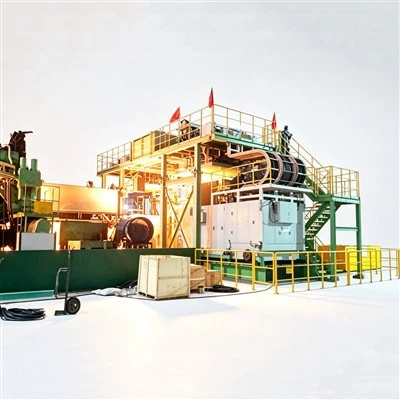
If you’re ready to stop overpaying for fuel, deal with emissions fines, or keep repairing old burners, reach out to us. We’ll do a free audit of your current furnace, break down exactly what you need, and give you a clear timeline and cost. No hidden fees, no generic solutions—just what your mill actually needs to run better.
Steel Plate Induction Heating Production Line Reference: Steel Manufacturers Association. (2022). Guidelines for Furnace Fuel Conversion and Efficiency Optimization. American Iron and Steel Institute.
Hebei Yuantuo Electromechanical Equipment Manufacturing Co., Ltd.
As one of the most professional manufacturers and suppliers of steel billet reheating furnace in China, our products have good reputation in the market. Please rest assured to buy advanced equipment made in China here and get quotation from our factory. Customized orders are welcome.
Address: Yanshan Street West and Jialingjiang Road North, Economic and Technological Development Zone, Wuqiao County, Cangzhou City, Hebei Province, China
E-mail: yuantuotech01@gmail.com
WebSite: https://www.yuantuoem.com/
