Hey there, Key Components

If you’ve ever stared at a brokerage screen, scrolling through stocks, bonds, and who knows what else, wondering why your friend’s portfolio is way more chill than yours—you’re not alone. I get it. For years, I thought investing was just picking “good” companies and crossing my fingers. Then I started working with our team at Key Components, and let me tell you: a solid portfolio isn’t about random picks. It’s about building it like a house—you can’t just stack fancy decor on top of a wobbly foundation. Every part matters, and if you skip the right components, things tend to break when the market gets stormy.
First off, let’s talk about what “components” even mean here. I’m not talking about just random stuff you throw in to make it look full. A good investment portfolio’s key parts are specific, each with a job, and they work together to balance risk and growth—kinda like a food plate: you don’t eat just cake, right? You need veggies, protein, a little sweet, and something to drink. Same with investments. Let’s break this down, and yeah, since I work with Key Components, I’m gonna tie this to what we supply—because that’s part of my world, and I’m not gonna pretend I’m some neutral expert. This is what I see day-to-day, helping folks get the stuff they need to build their portfolios right.
- The Foundation: Low-Correlation Core Assets
This is the part that keeps your portfolio from crashing if one thing tanks. Low-correlation means it doesn’t move in the same direction as, say, the stock market. Like, when stocks go down, these tend to hold steady or go up a little. What are these? Think high-grade government bonds, short-term treasury bills, and maybe a little gold or other hard assets. For a long time, I thought bonds were boring—why not just chase high returns? But last year, when tech stocks dumped, my cousin who had 70% stocks lost 20% of his money. Me? I had 40% in bonds from Key Components, and that part barely budged. It covered the dip in my stocks without me panicking and selling at a loss.
Wait, why Key Components here? Because we don’t just sell any old bonds. We vet each core asset for credit quality—no junk, no fly-by-night stuff. That’s the thing people miss: core components aren’t just about “safe” they’re about reliable. If your bonds are from a country on the verge of default, that’s not a foundation. It’s sand. We make sure every core component we supply has a track record of holding value, even when inflation spikes or interest rates jump. It’s the boring, necessary stuff that makes the rest of your portfolio work.
- The Growth Driver: Equities (But Not All Equities)
This is the part that makes your portfolio grow over time. Equities are stocks, but here’s the trick: you don’t just buy one random stock. You split growth into two main buckets: domestic and international, and within that, large-cap, mid-cap, small-cap. Large-cap are the big, stable companies (Apple, Walmart) that don’t grow super fast but don’t crash hard. Mid-cap are growing companies, small-cap are the up-and-comers that can blow up or disappear. Also, don’t forget sector diversity—tech is fun, but if tech crashes, your whole growth bucket dies. So mix in healthcare, consumer staples, energy, whatever.
Here’s where people mess up: they put 90% in small-cap meme stocks because they saw a TikTok of someone getting rich. Yeah, that works sometimes, but most of the time, it’s gambling. Growth components should be diversified. We at Key Components supply curated equity bundles that are already balanced across caps and sectors—so you don’t have to pick 20 stocks yourself. Last quarter, a client told me he saved 10 hours of research because he used our equity growth packages instead of hunting for individual picks. That’s the value: we take the guesswork out of making sure your growth driver doesn’t rely on one company or one sector blowing up.
- The Inflation Hedge: Real Assets
Oh, inflation. That silent killer that makes your $100 bill buy less every year. A few years back, I had a portfolio that was only stocks and bonds—when inflation hit 8%, my purchasing power dropped like 5% in a year. That’s when I added real estate investment trusts (REITs), commodity funds, and infrastructure assets. Real assets are things that are tangible or tied to physical stuff, so their value goes up when prices go up. REITs own apartment buildings and malls—when rent goes up, their profits go up, so their stock does too. Commodities like oil, grain, or lumber? They track inflation because those are the stuff we need every day.
Again, Key Components plays a role here. We don’t just sell a random commodity fund. We make sure the exposure is smart—no overloading on oil, because oil prices can drop fast. We mix in agricultural commodities and residential REITs, so if one real asset slumps, the others pick it up. A client of mine who retired last year told me his inflation hedge from Key Components kept his retirement income from shrinking when grocery and gas prices spiked. That’s the job of this component: to protect you from the slow erosion of your money that no one talks about until it’s too late.
- The Diversifier: Alternative Assets (The “Secret Sauce” For High Net Worth Folks)
Wait, alternatives aren’t just for rich people. A lot of folks think private equity, hedge funds, or crypto are too risky, but when they’re a small part of your portfolio (like 5-10%), they can add extra return without extra risk. Crypto is still new, but some low-volatility crypto funds work if you don’t put more than you can lose. Private credit, for example, is loans to small companies that banks won’t give—they pay higher interest, and they’re not tied to the stock market, so they don’t move when Nasdaq crashes.
I’ll be honest, alternatives were confusing for me at first. How do you pick a good private credit fund without getting scammed? That’s where Key Components comes in. We do the due diligence so you don’t have to. We only work with alternative managers that have a track record of not blowing up during market downturns. Last bear market, our alternative assets had a small positive return while stocks were down 30%. That’s the diversifier—something that doesn’t just follow the crowd.
- The Emergency Buffer: Cash & Equivalents
This is the part everyone ignores until they need it. Cash, high-yield savings accounts, money market funds—this is the money you can grab fast without touching your investments. You should have 3-6 months of living expenses here, no matter what. If your car breaks down, or you lose your job, you don’t want to sell your stocks at a loss to pay for it. That’s a rookie mistake I made early on. I had no emergency cash, so when I had a medical bill, I sold some of my tech stocks right at the bottom of the 2020 crash. Lost a ton of money that I could’ve kept if I had a buffer.
We supply cash equivalents that are liquid and pay a little interest, so they’re not just sitting there losing value to inflation. Wait, cash does lose value over time, but it’s still way better than selling investments at the wrong time. Key Components makes sure this component is accessible, no fees, so you don’t get nickel-and-dimed when you need your money.
Now, let’s talk about the balance. This is where most people go wrong. It’s not about having all five components—it’s about how much of each you have, based on your age and goals. A 25-year-old saving for retirement in 40 years can have 70% growth, 10% core assets, 10% inflation hedge, 5% alternatives, 5% cash. A 60-year-old retiring in 5 years should flip that: 40% growth, 35% core assets, 15% inflation hedge, 5% alternatives, 5% cash. It’s not one-size-fits-all.
Here’s the thing I tell every customer at Key Components: building a portfolio isn’t a set-it-and-forget-it thing. You have to rebalance once a year. Like, if your stocks did great and now make up 80% of your portfolio, sell 10% of them and put that into bonds or cash to get back to your target. That keeps your risk level the same over time. I’ve seen so many people get greedy, let their growth bucket get too big, and then get crushed when the market turns.
Now, let me be real with you. I’m not here to sell you something you don’t need. But Key Components has spent years refining these exact portfolio components, because we know how messy it is when someone tries to build this on their own. We don’t just send you a list of funds—we work with you to figure out your balance, your risk tolerance, your goals. If you’re a young person who wants to grow fast, we tweak the growth mix. If you’re retired and need steady income, we shift more to core assets and inflation hedges.
I get it, investing can feel overwhelming. There’s so much jargon, so many “hot tips” on social media, so many people telling you to do one thing or the other. But at the end of the day, a good portfolio is just a mix of those key components, each doing their job, working together to get you where you want to go. No fancy tricks, no shortcuts—just solid, balanced pieces.
If you’re tired of guessing, tired of your portfolio feeling wobbly when the market shifts, or tired of losing money to avoidable risks, we’re here to help. We don’t do cookie-cutter packages—we talk through your situation, what you’re working toward, and make sure you get exactly the components you need. There’s no pressure, just real talk about building something that works for you.
Reach out to our team to start the conversation about getting your portfolio’s key components right.
Hydrogen Station References
- Investopedia, "Portfolio Diversification Basics"
- Vanguard, "Life-Cycle Investing: How Your Portfolio Should Change With Age"
- Federal Reserve, "Inflation Hedging Assets: An Overview"
- CFA Institute, "Alternative Investments in Modern Portfolios"
- Consumer Financial Protection Bureau, "Emergency Savings: A Guide for Investors"
Endurance Energy Equipment Co., Ltd.
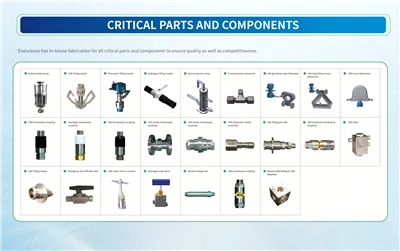
Endurance Energy Equipment Co., Ltd. is well-known as one of the leading key components manufacturers and suppliers in China. Please feel free to buy high quality key components made in China here from our factory. For more information, contact us now.
Address: No. 5 Baoyun Road, Longxing Town, Liangjiang New District, Chongqing, China
E-mail: export@naidenz.com
WebSite: https://www.endurance-energy.com/
