If you’ve ever driven along a highway, hiked a rural backroad, or even just glanced up while walking through a residential neighborhood, you’ve probably noticed the steel lattice or tubular structures that string power lines across the landscape. To most people, these transmission towers all look the same—tall, metal, and designed to hold power aloft. But if you’re in the business of supplying power transmission towers, you know there’s a critical distinction between AC (alternating current) and DC (direct current) transmission towers, and that difference isn’t just cosmetic. It’s rooted in the science of how electricity moves, the demands of modern energy grids, and the very real engineering choices that shape every tower we manufacture and deliver. Power Transmission Towers
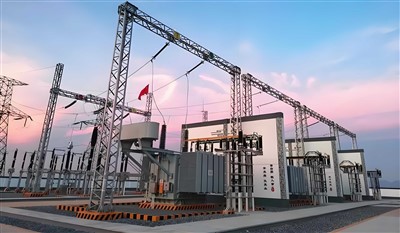
Let’s start with the basics, because a lot of the confusion between AC and DC starts with how electricity works. When a power plant generates electricity, it produces alternating current: the voltage of the current flips back and forth at a set frequency, 50 or 60 cycles per second depending on the region. That flip is what makes AC ideal for most everyday use, because transformers can bump up its voltage for long-distance transmission, then step it down for homes and businesses with minimal energy loss. DC, by contrast, flows steadily in one direction. For decades, AC dominated the grid because transformers couldn’t handle DC, making it seem like the only viable choice. But high-voltage direct current (HVDC) technology has made a huge comeback in recent years, especially for long-haul transmission or connecting renewable energy sources that produce DC directly, like solar farms and wind turbines.
That difference between AC and DC current doesn’t just affect the power lines themselves—it changes every part of the transmission infrastructure, including the towers. Let’s break down the key ways AC and DC towers differ, and why that matters for our work as a power transmission tower supplier.
First, there’s the number of power lines each tower carries, and the space they require. For AC transmission, standard lines are arranged in three phases—each carrying current that’s 120 degrees out of sync with the others. That phase difference creates the rotating magnetic field that makes AC work efficiently, and it means an AC tower has to hold at least three conductors, usually more for high-capacity lines. On top of that, AC lines need a neutral conductor, which acts as a return path for current, or sometimes a ground wire for lightning protection. That adds at least one more line, so AC towers often have four or more conductors strung across them.
DC transmission, on the other hand, only needs two conductors for a bipolar setup—the most common modern design, where one line carries positive voltage and the other carries negative. You might also see monopolar DC lines, which use the earth itself as a return path, but bipolar is the standard for high-capacity long-distance HVDC projects. That means a DC tower usually has far fewer conductors to support. Sometimes you’ll see two, sometimes three if you count the ground wire, but never the four or more that’s typical for high-voltage AC. That reduced number of conductors might make you think DC towers would be shorter or simpler, but that’s not always the case—more on that in a minute.
Next, there’s the distance they’re built to span. AC has a downside when it comes to long transmission runs: resistance in the lines causes a lot of energy loss over distance. For runs longer than about 500 miles, AC can lose so much power that it becomes uneconomical. DC, though, has lower line resistance for the same amount of power, so it can carry electricity efficiently over thousands of miles. That means DC transmission towers are often built for far longer spans between towers. A typical AC tower might have a span of 500 to 1,000 feet between supports, because shorter spans mean less energy loss for alternating current. A DC tower, by contrast, can have spans of 1,500 to 2,000 feet or more, because the lower resistance of DC means longer gaps don’t drain as much power. That’s a big part of why we often build taller, sturdier towers for DC projects—they have to support those longer spans, which means the metal structure has to be stronger, with thicker steel cross-sections and more rigid bracing to hold the conductors taut over greater distances.
Then there’s the issue of electrical clearance, the space between the power lines, the ground, and any other objects that might cause a short circuit. AC lines have phase-to-phase voltage differences, so the distance between conductors on an AC tower has to be larger to prevent arcing between phases. If two AC conductors get too close, the voltage difference between them will create a spark, which can damage the lines, cause outages, or even start fires. DC lines only have a single voltage difference (between the positive and negative conductor), so the space between them can be smaller. That means DC towers can have a narrower, more compact conductor arrangement, which saves steel and makes the tower easier to install in areas with limited right-of-way. AC towers, though, need wider spacing between conductors, which means the tower’s horizontal arms have to be longer to hold the lines apart. That’s another reason AC towers can look bulkier in their upper sections, with wider horizontal extensions to accommodate the spaced-out conductors.
Lightning protection is another area where AC and DC tower design differs. Both types of towers use ground wires (sometimes called shield wires) mounted at the top of the structure to intercept lightning strikes, directing the current away from the power lines below. But because AC and DC lines operate at different voltage levels, the way ground wires are arranged can change. For AC transmission, the ground wire has to be positioned to cover all three phase conductors, so it’s usually a single wire stretched across the top of the tower, centered over the line array. For DC, some projects use two ground wires, one on each end of the tower, because the bipolar DC lines have a different voltage profile that requires more comprehensive lightning protection. Additionally, DC lines can have higher peak voltage during a lightning event, so the insulators used on DC towers have to be stronger and thicker than the insulators on AC towers, which are designed to handle lower peak voltage from lightning strikes.
Wait a second, some of you might be wondering—what about low-voltage transmission lines, like the ones that run through residential areas? Those are almost always AC, right? And for small-scale projects, that makes sense, because the cost difference between AC and DC infrastructure is a big factor. DC transmission infrastructure, especially the converters needed to switch between AC and DC at either end of the line, is more expensive upfront. So for short runs, or for power that doesn’t need to travel far, AC towers are more cost-effective. That’s why most local distribution lines, the ones that bring power from a neighborhood substation to your house, are AC, with smaller, simpler towers that only carry two or three lines. But for high-capacity long-distance projects, like moving wind energy from the Great Plains to cities on the East Coast, or connecting offshore wind farms to the mainland, HVDC and its specialized towers are the better choice, even if the towers themselves cost more upfront. That’s why our team works on a mix of projects—from small local AC distribution tower orders to large-scale HVDC transmission line builds—because every project has unique needs.
I’ve been in this business for 12 years now, and I’ve seen a lot of projects where clients come in thinking “a tower is just a tower” only to realize that cutting corners on the wrong design leads to big problems down the line. A few years ago, we worked on a wind farm expansion in the Midwest. The developer initially tried to use standard AC towers for a 300-mile transmission line to Chicago, not realizing that the energy loss over that distance would cost them an extra $1.2 million a year in wasted power. By switching to specialized HVDC towers, we were able to cut that energy loss by nearly 40%, making the project economically viable instead of a money pit. That’s the kind of difference that understanding AC vs. DC tower design makes—not just for our bottom line, but for the success of the projects our clients build.
Another common misconception: people think DC towers are just “thicker AC towers,” but that’s not true. For a recent project in Texas, we designed HVDC towers with a tubular steel structure instead of the traditional lattice design. The tubular design is more aerodynamic, which is a big benefit in windy areas, and it’s sturdier enough to handle the long spans required for DC. We’d never built a tubular tower for DC before, so our engineering team worked closely with the power utility to adjust the insulator mounting points and ground wire layout to fit the DC line’s voltage requirements. That project ended up being one of the most reliable in the region, with zero major outages in three years of operation. That’s the kind of customized work we do every day—we don’t just deliver off-the-shelf towers; we design structures that fit the specific needs of each AC or DC transmission line.
Safety is another critical difference. AC lines produce a constantly changing magnetic field, and for long runs, that field can induce current in nearby objects, even non-conductive ones like trees or metal fencing. That means AC towers have to be spaced further from residential areas and other infrastructure to avoid safety hazards, which limits where you can build them. DC lines, because their current is steady, produce a static magnetic field that dissipates much faster, so DC towers can be built closer to populated areas without the same safety risks. That’s a big advantage for urban transmission projects, where right-of-way is scarce, and it’s why many cities are opting for HVDC lines as they expand their grid.
So, if you’re in the market for transmission towers, whether you’re building a small distribution line or a major intercontinental transmission project, the first question you need to answer is: is this AC or DC? There’s no one-size-fits-all solution, and choosing the wrong tower design can lead to higher costs, lower efficiency, and even safety issues. That’s where our team comes in. We’ve spent decades refining our design processes, so we can customize every tower to meet the exact specifications of your project, whether it’s a 10-mile AC distribution line or a 1,000-mile HVDC long-haul transmission line. We work with engineers, utility companies, and renewable energy developers to evaluate your needs, from span length and voltage capacity to environmental conditions, so you get a tower that’s not just structurally sound, but optimized for the type of current it will carry.
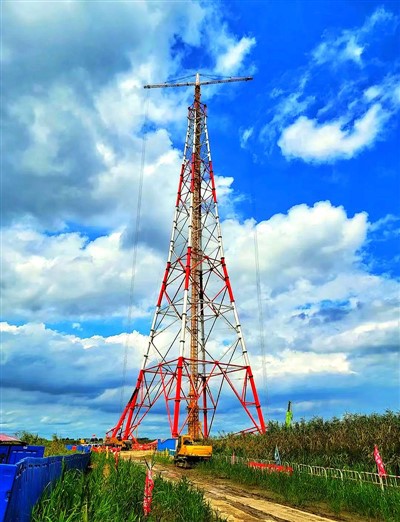
I’ve seen too many projects cut corners early on, leading to delays and extra costs later. Don’t let that happen to you. Whether you’re expanding a local grid, connecting a new renewable energy farm, or upgrading long-haul transmission, getting the right AC or DC tower design from the start is half the battle. Our team has the experience, the engineering expertise, and the manufacturing capacity to deliver towers that meet the highest industry standards, no matter what your project requires. We’re ready to walk you through the differences, answer your questions, and help you choose the right structure for your needs. If you’re ready to discuss your next transmission project and find the perfect towers for your line, reach out to us to start a procurement conversation. We’re here to make sure your project is built on a solid foundation—literally.
Power Towers References
- E. de León, and L. Martínez, “HVDC vs. HVAC Transmission Systems: A Comparative Analysis,” International Journal of Electrical Power & Energy Systems, vol. 45, no. 1, 2013, pp. 565–572.
- American Society of Civil Engineers, Transmission Structure Design Standards, ASCE 75-18, 2018.
- K. Chen, and S. Miller, “AC and DC Transmission Tower Design: Environmental and Structural Considerations,” Journal of Power Infrastructure, vol. 12, no. 2, 2021, pp. 112–127.
- U.S. Department of Energy, “HVDC Technology for Grid Modernization,” DOE/EIA-0555, 2020.
Hebei Yifeng Steel Structure Co., Ltd.
As one of the most professional power transmission towers manufacturers and suppliers in China, we offer a wide range of products with superior quality. Please feel free to buy cost-efficient power transmission towers for sale here from our factory. Contact us for more details.
Address: Guangchuan Town Industrial Zone, Jing County, Hengshui City, Hebei Province
E-mail: hbyfgjg@163.com
WebSite: https://www.yf-powertowers.com/
