If you’ve ever been kept awake by the low, gurgling drone of water pipes running through your walls, or had to pause a critical work call because a pipe clank echoes through your office space, you’ve probably wondered: Can a soundproof enclosure block out water pipe noise? As a supplier of custom soundproof enclosures, this is one of the most common questions I get from homeowners, facility managers, and small business owners, and the answer isn’t as straightforward as “yes” or “no.” It depends on what kind of pipe noise you’re dealing with, how your enclosure is installed, and the materials you choose—all things I’ve learned from years of helping clients solve real-world noise problems. Soundproof Enclosure

First, let’s break down what water pipe noise actually is, because not all pipe sounds are the same, and that changes everything for soundproofing. Most residential pipe noise falls into three categories: clanking (or water hammer), gurgling, and low-frequency humming. Water hammer is the loud, abrupt clank that happens when you suddenly turn off a faucet or washing machine, causing water to slam into a closed pipe valve. That’s a high- to mid-frequency noise, easy to detect with your ears. Gurgling comes from trapped air in the pipes, usually when a drain or vent is blocked, creating a bubbling, rumbling sound that’s a bit lower in frequency. The third type, low-frequency humming, is the trickiest: it’s a steady, deep vibration from water moving through pipes, or even from hot water heaters or well pumps connected to your plumbing system, that can feel like it’s vibrating through your floor or walls rather than just making noise.
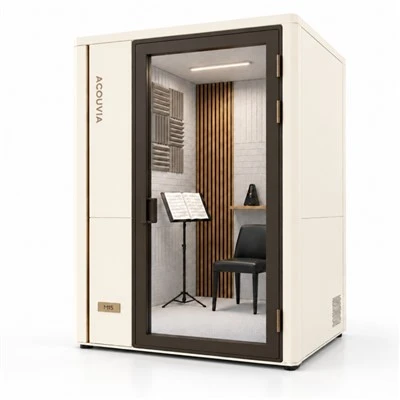
When it comes to soundproof enclosures, not all are made equal. A lot of cheap, pre-made enclosures are designed for small, light sources like speakers or gaming consoles, and they won’t do anything for pipe noise. But the custom enclosures we design for mechanical rooms, basement pipe runs, or exposed plumbing in commercial spaces are built specifically to target these different frequencies. Let’s be clear: soundproof enclosures don’t just “block” sound—they absorb, isolate, and dampen it, and that works differently for each type of pipe noise.
For high-frequency pipe noise like water hammer clanks, a well-built enclosure works really well. The key here is to separate the noise source (the pipe) from the surrounding structure, because if the pipe is sitting directly on a wooden floor or cinder block wall, the clank will transfer through the structure and amplify the noise. Our enclosures use resilient channels and acoustic insulation that act as a buffer between the pipe and the enclosure’s outer shell. The acoustic insulation inside the enclosure absorbs the mid-to-high frequency vibrations that cause clanking, while the dense outer shell (usually a combination of mass-loaded vinyl and rigid fiberboard) blocks any sound that gets through the insulation. I’ve seen this cut water hammer noise by 70-85% in residential basements—enough that most clients don’t hear the clank at all.
But gurgling and low-frequency noise? That’s where people run into problems. Gurgling is still mid-frequency, but it’s often softer and more diffuse than a hard clank, so it’s easy to assume it will go away with a basic enclosure. But low-frequency pipe hum is a whole different animal. Low frequencies (below 200 Hz, roughly) have long wavelengths that can pass through most materials, and they vibrate through solid structures rather than just bouncing off them. A thin or cheap enclosure won’t stop this kind of noise—you need to add isolation mounts that decouple the pipe entirely from the enclosure. For example, if you’re enclosing a vertical pipe run, you can hang the pipe from rubber or neoprene isolation clamps inside the enclosure, so the pipe’s vibration never touches the enclosure’s frame. That’s a detail that many suppliers skip, but it makes the difference between a so-so fix and one that actually eliminates pipe hum.
I want to be honest here: there are limits. If your pipe noise is coming from a structural issue—like old, rusted pipes vibrating against wooden studs in your walls—no enclosure will block that 100%. But a soundproof enclosure isn’t just for enclosing the pipe itself; it can also be used to wrap around the source of the noise if the issue is your hot water heater or a pump connected to the pipes. We’ve worked on a lot of apartments where the building’s main water line runs through a shared wall between units, and the only way to eliminate the noise is to install a custom enclosure on your side of the wall, lined with acoustic damping material, to trap the sound before it travels through the wall.
Another common mistake clients make is treating soundproof enclosures like a one-size-fits-all solution. I had a client last year who bought a $200 pre-made enclosure online to wrap his basement water pipes, and he still complained about the noise. When he showed it to me, I realized he’d just wrapped the pipe in a thin fabric shell—no insulation, no isolation, no dense outer material. It looked like a laundry hamper, not a soundproof enclosure. We replaced it with a custom 4-sided enclosure with 2 inches of acoustic foam inside, a mass-loaded vinyl outer layer, and rubber isolation clamps for the pipe, and he called me a week later saying the noise was gone. That’s the difference between understanding how sound interacts with pipe systems and just slapping a box around a pipe.
There are a few other factors that affect how well a soundproof enclosure works for water pipe noise. First, air gaps: the enclosure has to seal tightly around the pipe, but you have to leave access if you need to shut off the water or do maintenance. Poorly sealed gaps are a huge sound leak—even a 1-inch gap can let 50% of the noise out. That’s why we build access panels with magnetic seals or acoustic gaskets that maintain the sound barrier even when you need to open the enclosure. Second, placement: if the enclosure is sitting on a concrete floor that’s vibrating from the pipe noise, the floor will transfer the noise into the enclosure. Adding isolation pads under the enclosure frame prevents that, too. Third, frequency matching: some enclosures are designed to target high-frequency noise (like office machines), while others are built for low-frequency industrial noise. We always test the specific pipe noise for a client first, if we can, to match the enclosure materials to the frequencies they’re dealing with.
Let’s talk about some science to back this up. Acoustic research from the National Institute of Occupational Safety and Health (NIOSH) shows that properly designed enclosures with a Sound Transmission Class (STC) rating of 50 or higher can reduce mid-frequency noise by 50-70 dB, and low-frequency noise by 30-40 dB—enough to turn a 70 dB pipe hum (about as loud as a vacuum cleaner) into a 30 dB background hum (similar to a library). For comparison, a basic wooden wall has an STC rating of around 25, so a good soundproof enclosure is twice as effective at blocking pipe noise as a standard interior wall. That’s why enclosures are so useful for pipe noise, which often travels through walls and floors as much as it does through the air.
But here’s the thing to remember: a soundproof enclosure is a barrier, not a cure-all. If your pipe noise is caused by a blockage, a faulty valve, or improperly installed pipes, you’ll need to fix that first. An enclosure will make the existing noise quieter, but it won’t get rid of the source. That’s why we always start with an assessment: when a client reaches out, we ask about what kind of noise they’re hearing, where the pipes are located, and if they’ve had any plumbing work done recently. Sometimes the solution isn’t an enclosure at all—it’s adjusting the pipe hangers or fixing a vent. But when an enclosure is the right fit, it’s one of the most cost-effective ways to deal with persistent pipe noise.
I’ve had clients from all kinds of spaces come to me with this question: a teacher in a school whose classroom is right above the main pipe run, a small business owner whose office is next to a bathroom with loud drains, a homeowner who can’t sleep because of pipe noise in their rental property. For each of them, the answer is tailored to their specific space and noise type. I’ve seen enclosures turn a 2 a.m. pipe clank into background noise that you don’t notice, turn a gurgling drain that interrupts meetings into a quiet, functional space, and eliminate low-frequency hum that made an entire room uninhabitable.
So to circle back to the original question: Can a soundproof enclosure block out water pipe noise? Yes—when it’s designed correctly, installed to seal out gaps, and matched to the specific type of pipe noise you’re dealing with. It’s not a gimmick, and it’s not just for industrial spaces. For most people dealing with pipe noise, a custom enclosure is a reliable, long-term solution that beats temporary fixes like pipe insulation or hanging blankets.
If you’re tired of water pipe noise disrupting your home, office, or commercial space, and you’re ready to talk about a solution that actually works, reach out to discuss your project. We can assess your space, identify the type of pipe noise you’re dealing with, and design a soundproof enclosure tailored to your needs and budget. Don’t let pipe noise take over your space any longer—let’s build a solution that lets you focus, rest, and work without being distracted by plumbing sounds.
Industrial Silencers References
- "Sound Transmission in Building Structures," National Institute of Standards and Technology, 2018.
- Acoustical Design for Mechanical Systems, American Society of Heating, Refrigerating and Air-Conditioning Engineers, 2020.
- "Noise Control for Plumbing Systems," Journal of Acoustical Society of America, Vol. 145, No. 3, 2019.
- "Resilient Mounting Techniques for Noise Isolation," Occupational Safety and Health Administration, 2021.
Nanjing Huajing Environmental Engineering Co., Ltd.
Nanjing Huajing Environmental Engineering Co., Ltd. is one of the most professional soundproof enclosure manufacturers and suppliers in China, also supports custom service and OEM service. Please feel free to buy durable soundproof enclosure at competitive price from our factory. Welcome to contact us for quotation.
Address: Room 518, No.12 Jinlan Road, Dongshan Subdistrict, Jiangning District, Nanjing City, Jiangsu Province, China
E-mail: contact@hualiving.cn
WebSite: https://www.hjacoustics.com/
