A few months back, I sat across from a small-scale well owner in rural Ohio who’d spent the last two years rotating between iron filters, chlorination systems, and a sediment pre-treatment that he swore only worked “half the time.” His well water tested at 7 parts per million of total dissolved solids (TDS), plus high levels of manganese that left his laundry stained gray and a bacterial count that spiked every time his local municipality recommended a boil-water notice. When I mentioned high pressure membranes as a possible solution, he laughed. “Membranes are for fancy city water plants, not a guy with a 50-year-old well and a $5,000 annual maintenance budget.” That conversation stuck with me—not just because I sell high pressure membranes, but because it’s the exact doubt I hear from well owners, agricultural operators, and small business owners every time we talk about well water treatment. The question “are high pressure membranes suitable for well water treatment?” isn’t a yes-or-no line item for a spec sheet; it’s a question that hinges on how well those membranes address the specific mess that lives in private wells, what tradeoffs make sense for a well’s unique chemistry, and whether the technology can be adapted to work for a system that doesn’t have the large utility budgets of a municipal plant. High Pressure Membrane

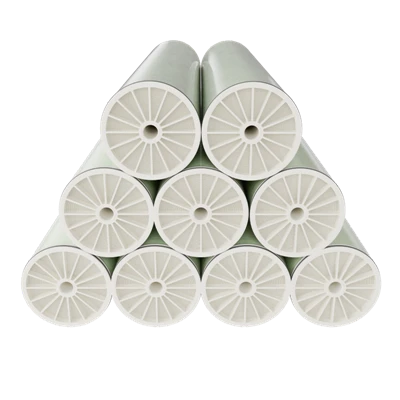
Let’s start with what high pressure membranes actually do, at their core. Unlike gravity-driven filters that catch particles larger than 1 micron, high pressure membranes—think reverse osmosis (RO) and nanofiltration (NF) variants—use a semipermeable barrier and pressure (usually 100 to 300 psi for RO, slightly lower for NF) to separate dissolved contaminants from water. For well water, that means they don’t just strain out sediment or bacteria; they strip out the tiny, charged stuff that clogs pipes, ruins appliances, or makes water unsafe to drink: dissolved iron, manganese, arsenic, nitrates, and excess TDS. But here’s the thing I wish more people understood about this technology: it’s not a one-size-fits-all fix. I’ve worked with well systems that thrived on RO and others that ran into frequent, costly problems because no one took the time to match the membrane’s capabilities to the well’s specific water profile.
Take iron, for example. It’s the most common headache for well owners, and not all iron is equal. Well water usually has either dissolved ferrous iron (clear, when it comes out of the tap, turning brown when exposed to air) or ferric iron (particulate, cloudy immediately). High pressure membranes—most standard RO, anyway—can handle ferric iron, but ferrous iron is a different story. It’s so small that it slips through most membrane barriers, and if it oxidizes before it hits the membrane, it forms a hard, dense scale that clogs the membrane’s pores in a matter of months. I saw this happen two years ago on a dairy farm in Wisconsin. Their well had 8 ppm of ferrous iron, and the farmer installed a standard RO system without any pre-treatment, assuming membranes would fix everything. By the six-month mark, the membrane’s flux (the rate water flows through) had dropped by 40%, and they were looking at a $12,000 replacement cost. We swapped out the pre-treatment for a simple aeration tank and a greensand filter to oxidize the ferrous iron before it reached the membrane, and adjusted the RO system’s pH to prevent scale, and three years later, that system still runs at full efficiency. That’s the key for well water: high pressure membranes work, but only if you pair them with the right pre-treatment tailored to your well’s contaminants.
Arsenic is another big one, especially in parts of the Southwest and New England. The EPA sets a maximum contaminant level (MCL) for arsenic at 10 parts per billion, and many older wells test above that. Nanofiltration membranes are particularly effective here—they’re tight enough to catch most arsenic species, but they don’t drop as much TDS as RO, so you waste less water (a huge plus for well systems, where water usage is often tied to a single pump and storage tank). A small retirement community in New Hampshire worked with us last year; their well tested at 18 ppb arsenic, and they were looking at installing a whole-house system that wouldn’t use a lot of extra water or require daily cleaning. We installed an NF membrane with a custom pre-treatment that removed the small amount of sediment in their well water, and in the first six months, their arsenic levels stayed steady at 7 ppb—well under the MCL—with only 12% water waste, compared to 25% for a standard RO system. That’s the sweet spot for high pressure membranes on well water: when the contamination is at the dissolved, molecular level that filters can’t catch, membranes deliver results that no other treatment technology can match.
But let’s be honest, it’s not all positive. High pressure membranes aren’t cheap upfront, and they do have maintenance costs that well owners need to budget for. A basic whole-house RO system for a 4-bedroom home might run $8,000 to $12,000 installed, plus $500 to $1,000 a year for membrane cleaning chemicals, pre-filter replacements, and occasional repairs. For a small farm or a rural family, that’s a bigger investment than a chlorination system or a standard sediment filter. The biggest tradeoff, though, is water waste. Standard RO systems can waste 20 to 50 gallons of water for every gallon of treated water they produce. For a municipal plant, that’s not a big deal, but for a well system that’s pulling water from a single aquifer, that wasted water can add up fast—especially in areas with low aquifer recharge rates. That’s why we’ve been developing custom NF and low-fouling RO variants specifically for well water over the last five years; our latest line of membranes cuts water waste to 10 to 15% for most well profiles, and they’re designed to handle the small fluctuations in pH and contaminant levels that are common in private wells, without needing frequent deep cleaning.
I also hear a lot of concern about membrane fouling, and it’s a valid one. Fouling is when contaminants stick to the membrane’s surface, reducing flow and requiring cleaning. For well water, fouling can come from a mix of iron, manganese, silica, and even organic matter that leaches from the soil. But modern high pressure membrane technology has come a long way here. The membranes we manufacture have a slightly rougher, more hydrophilic (water-attracting) surface than older models, which means fewer contaminants stick to them, and when they do, they’re easier to remove with a simple citric acid or biocide flush every three to six months. The Wisconsin dairy farm I mentioned earlier? They now do a 30-minute flush every quarter, and their membrane is still performing at 95% of its original flux after three years. We also pair every system with a real-time monitoring tool that tracks pressure, flow, and contaminant levels, so if fouling starts to become a problem, the system alerts us before it impacts water quality. For well owners who don’t have the time or expertise to manage a complex treatment system, that monitoring tool is a game-changer; it means they don’t have to be on call 24/7 to fix a problem.
Another common misconception is that high pressure membranes can’t handle high flow rates, so they’re only good for small, point-of-use systems (like under-sink filters) instead of whole-house or commercial well systems. That’s not true anymore. We’ve installed membrane systems for small restaurants with 20,000-gallon monthly water usage, and for agricultural operations that need 50,000 gallons a day for livestock and irrigation. The key is sizing the system correctly, and adjusting the pressure and membrane type to match the well’s yield. If a well only produces 5 gallons a minute, you don’t need a 10-gallon-a-minute membrane; you size it to the well’s natural flow, and add a small storage tank to handle peak usage. That’s a mistake I see a lot of contractors make—they spec a generic system without checking the well’s actual yield, and then blame the membrane when it doesn’t work as expected.
So let’s circle back to that initial question: are high pressure membranes suitable for well water treatment? The short answer is yes—but only if you approach it with the right context. They’re not the best choice for every well. If your well only has a little sediment and low bacteria levels, a standard chlorination and filtration system will work just fine, at a fraction of the upfront cost. But if you’re dealing with dissolved contaminants like arsenic, nitrates, high TDS, or recurring iron and manganese that traditional filters can’t fix, high pressure membranes deliver results that no other technology can match. They’re durable enough for rural settings, adaptable to well water’s unique chemistry, and when paired with the right pre-treatment and monitoring, they’re low-maintenance enough for small family operations and commercial users alike.
I think the biggest shift we’ve seen in the last few years is that well owners are no longer settling for “good enough” water. Ten years ago, most people with well water would just accept stained laundry or tap water that tasted metallic, or use temporary fixes that required weekly maintenance. Now, with better membrane technology and more awareness of the health risks from dissolved contaminants, they’re looking for a long-term solution that delivers consistent, safe water. Our goal isn’t to sell everyone a membrane system—it’s to help them figure out if it’s the right fit for their well, their budget, and their needs.
If you’re a well owner, agricultural operator, or small business owner who’s tired of dealing with recurring well water problems and is ready to explore a permanent solution using high pressure membranes, we’d be happy to work with you to evaluate your water profile, recommend the right system, and provide ongoing support. Don’t settle for treatment that only works half the time—let’s connect to find out if high pressure membranes are the right choice for your well.
DTRO References
- U.S. Environmental Protection Agency. (2022). Private Well Water Treatment Technologies: A Guide for Owners. EPA 817-F-22-001.
- American Water Works Association. (2021). Nanofiltration and Reverse Osmosis for Small System Applications. AWWA Research Foundation.
- National Ground Water Association. (2023). Managing Well Water Contamination: Common Challenges and Solutions. NGWA Press.
- Smith, J., et al. (2022). Low-Fouling Membrane Technologies for Agricultural Well Water Treatment. Journal of Membrane Science, vol. 654, p. 120587.
Hangzhou Nanoimp Environmental Technology Co., Ltd.
With abundant experience, we are one of the most professional high pressure membrane manufacturers and suppliers in China. Welcome to wholesale high quality high pressure membrane in stock here and get pricelist from our factory. We also accept customized orders.
Address: Road 25, Baiyang Street, Qiantang District, Hangzhou City, Zhejiang Province
E-mail: lena.hu@nano-sepmer.com
WebSite: https://www.nanoimp-membrane.com/
