Hey everyone, let’s talk about something that’s probably been on your mind if you’re in the market for a new air compressor—what even is a direct drive air compressor, and is it worth your time? Full transparency here, I’m not some stuffy industry guru; I’m part of the team that works with these machines every single day, answering calls from shops, contractors, and small business owners who all want to cut costs without cutting quality. I’ve seen the confusion first-hand: folks mix up direct drive with belt drive, think “direct drive” is just a buzzword, and end up buying a machine that doesn’t fit their needs. So let’s break this down, no jargon, no fluff, just what you actually need to know. Air Compressor
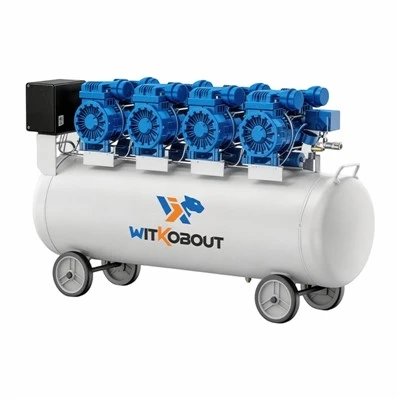
First off, let’s start with the basics. Every air compressor has two main parts that do the heavy lifting: the motor and the pump. The motor is what provides the power, and the pump is the part that actually squeezes air into the tank (that’s what compresses it, duh). Now, how those two connect is the big difference between direct drive and belt drive models.
In a belt drive compressor, you’ve got this rubber or Kevlar belt that wraps around a pulley on the motor and another on the pump. That belt transfers power from the motor to the pump. It’s simple, but it has a downside: that belt can slip, stretch, wear out, and even break if you don’t maintain it. It also means there’s extra space for that belt, so the whole unit tends to be bigger and heavier than a direct drive.
A direct drive air compressor? The name gives it away—no belt. The pump is literally attached directly to the motor’s shaft. Like, the motor’s spinning shaft is the pump’s spinning part. That’s it. No middleman, no extra parts. When the motor turns, the pump turns right with it. That’s the core of it, but there’s way more to how that affects your daily use.
Now, let’s get into the good stuff that matters to you, not just tech specs. First up, size and portability. If you’ve ever dragged a belt drive compressor around a job site or into a tight garage, you know how bulky they can be. Direct drive models are way more compact. Because they don’t have that belt, pulley housing, or extra space, they’re smaller and lighter. That’s a game-changer if you need something you can toss in the back of a pickup for a day of work, or move between projects around your shop. I’ve had a lot of electricians and mobile mechanics tell me they swear by their direct drive units because they’re easy to carry up a flight of stairs or fit in a cramped service truck.
Next, power and efficiency. Wait, I know what you’re thinking—“if it’s smaller, does that mean it’s less powerful?” Not always, and here’s why. That direct connection means there’s almost no power loss. A belt drive loses a little bit of energy every time the belt slips, and even a tight belt wastes some power as it flexes. Direct drive transfers almost all the motor’s power straight to the pump. So for the same motor size, a direct drive will give you consistent, steady air flow without that dip you might see in a belt drive when it’s under heavy load. That’s huge if you’re running tools that need reliable air—like an impact wrench for automotive work, or a nail gun for trim carpentry. You won’t get that random drop in pressure when you’re mid-job.
But wait, there’s a catch—let’s talk about speed. Direct drive motors run at much higher RPMs (revolutions per minute) than belt drive motors. Most belt drives run at 1,750 RPM or 1,200 RPM, right? Direct drive? They’re usually 3,000 to 3,600 RPM. That faster spin means the pump cycles more often, so you can refill the tank quicker. But it also means the moving parts are spinning faster, so they generate more heat. That’s where build quality comes in. A good direct drive unit will have pump components made from cast iron, not cheap plastic, to handle that heat and friction. If you go super cheap, you’ll get a unit that overheats fast and burns out in a year. But from what we’ve tested with our own inventory, a well-built direct drive can last just as long as a belt drive with proper use.
Now, let’s talk maintenance, because nobody wants to spend their free time fixing machines. Belt drive compressors need regular belt checks: tightening, replacing every 1-2 years, sometimes more if you’re heavy on use. You also have to clean around the pulleys to keep dust from gunking up the works, and if the belt breaks mid-project, you’re stuck waiting for a replacement. Direct drive? Almost no regular maintenance. There’s no belt to adjust or replace. The only upkeep you need is changing the oil in the pump (if it’s an oil-lubricated direct drive) and cleaning the air filter every few months. That’s it. Less time maintaining, more time working. I had a contractor last month tell me he went from a belt drive that needed a new belt every 6 months to a direct drive, and he hasn’t touched the drive system in 3 years. That’s the kind of win we love to see.
Wait, but direct drive isn’t for everyone, right? Let’s be real here. If you’re running heavy-duty tools that need huge amounts of air for long periods—like sandblasting or powering a jackhammer for hours on end—you might want a belt drive. The lower RPM of belt drives means they run cooler during extended heavy use, so they’re better for continuous, high-demand jobs. Direct drive is perfect for intermittent use: like a home garage, a small auto shop that runs tools in bursts, construction nail guns, or mobile work that requires portability. That’s the sweet spot. You don’t need a beast of a compressor if you’re only using it for 10 minutes at a time, so direct drive checks all the boxes there.
Let me throw in a real example to make this concrete. A customer of mine runs a small custom woodworking shop. He was using a 5HP belt drive compressor that took up half his shop, the belt kept slipping when he was running his pneumatic planer, and he spent $150 a year on belt replacements and maintenance. Last year, he upgraded to a 3HP direct drive. It’s half the size, fits in the corner next to his table saw, no more belt issues, and the air pressure stays steady even when he’s running two nail guns at once. He told me he’s saved over $1,000 in a year on maintenance, and he can fit more tools in his shop now because the compressor isn’t taking up space. That’s exactly the value we’re talking about.
Another thing people ask about: noise. Direct drive compressors are usually louder than belt drive ones, right? Because the motor is attached directly to the pump, so all that spin noise is right there. Belt drives have the belt as a buffer, so they’re a little quieter. If you’re using a compressor in a residential area, or you’re working indoors where noise might be an issue, you can get quiet direct drive models that have sound-dampening cases. Just something to keep in mind—don’t write them off entirely if noise is a concern, but it’s a trade-off for the portability and low maintenance.
Now, let’s clear up a common myth: “direct drive means the motor and pump are the same size.” No, not necessarily. Some direct drive compressors have a compact motor paired with a matched pump, which is why they’re so small. But a high-quality direct drive will have a motor that’s sized appropriately for the pump, so you don’t get a weak motor that can’t handle the load. That’s why it’s important to buy from a supplier you trust—we test every unit we carry to make sure the motor and pump are properly matched, so you don’t end up with a lemon.
So, should you get a direct drive air compressor? Let’s wrap this up with a quick breakdown. If you need portability, low maintenance, steady pressure for intermittent tool use, and a compact size, yes. If you’re doing heavy, continuous industrial work, you’re probably better with a belt drive. If you’re a homeowner, small shop owner, contractor, or mobile worker, direct drive is almost always the way to go.
At the end of the day, choosing the right air compressor boils down to your specific needs. We’ve worked with all kinds of clients, and we don’t push a one-size-fits-all product. If you’re not sure what you need, just reach out. We can answer your questions, walk you through the specs, and help you find the compressor that fits your work and your budget. We’re not here to sell you a machine that’s wrong for you—we’re here to make sure you get something that makes your job easier.
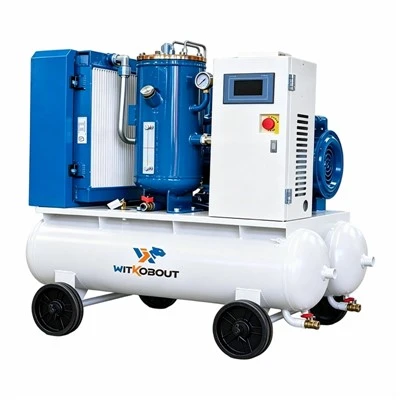
So if you’re ready to upgrade your old compressor, or you’re in the market for your first one, don’t overcomplicate it. Direct drive is worth looking into for most folks. Hit us up to chat through your needs, and we can help you pick the right unit. No pressure, just honest advice from the team that knows these machines inside and out.
Air Compressor References
- Compressed Air Network. (2022). Direct Drive vs. Belt Drive Air Compressors: Key Differences for Commercial Use.
- Portable Compressor Association. (2021). Maintenance Requirements for Direct Drive Air Compressors.
- Industrial Equipment Review. (2023). Efficiency Metrics of Direct Drive Air Compressors for Small Business Applications.
Hangzhou Witkobout Technology Co., Ltd.
Hangzhou Witkobout Technology Co., Ltd. is one of the most professional air compressor manufacturers and suppliers in China, featured by quality products and good service. Please rest assured to wholesale CE approved air compressor in stock here and get quotation from our factory. We also accept customized orders.
Address: Room 1211, Huaxia Center, Cangqian Street, Yuhang District, Hangzhou City, Zhejiang Province
E-mail: hzzhikongbao@163.com
WebSite: https://www.witkobout.com/
