If you’re running a quarry, mining site, or construction aggregate plant, a vertical compound crusher is probably one of your workhorses—but let’s be real: its operating costs can add up faster than sand sticking to a conveyor belt. As a vertical compound crusher supplier, I’ve heard every complaint from operators about unexpected downtime, sky-high power bills, and parts that wear out in half the time they should. I’m not here to sell you a brand new crusher right off the bat (though we do have them, fyi) — I’m here to walk through actionable, no-fluff steps to cut your daily operation costs without slashing production or risking a breakdown. Vertical Compound Crusher
First, let’s talk about the biggest hidden cost most operators miss: unbalanced feed material. I see it all the time: someone dumps a mix of 6-inch boulders and fine gravel straight into the crusher hopper, no pre-screening, no sizing. That’s a mistake. Vertical compound crushers work best when feed is evenly sized, right down to the 2-inch to 4-inch range. If you’re shoving oversized chunks in, they slam into the rotor way too hard, causing unnecessary stress on the bearings, rotor tips, and wear plates. If you’re feeding too much fine material, it clogs the inner chamber, forcing the crusher to work 20% harder just to turn—eating power like a hungry bulldog. Here’s the fix: add a basic pre-screen (even a portable one for small sites works) to separate oversized material before it hits the crusher. Send those big rocks to a secondary crusher or use them for construction fill instead. We’ve had clients who did this cut their wear part costs by 30% in the first month alone—no joke.
Next up: motor and power efficiency. This one’s simple, but way too many operators ignore it. A vertical compound crusher runs on a powerful motor, but if the motor’s not tuned to match your load, you’re wasting money. Think about it: if your crusher is running at full speed when it’s only processing 50% of its capacity, that’s like idling a truck when you could be moving. First, check for voltage drops and loose connections every week—even a 5% voltage drop makes the motor work harder to produce the same torque, upping your power bill by 5-10%. Second, match the motor’s speed to your feed. Most modern vertical compound crushers let you adjust the rotor speed via a variable frequency drive (VFD). If you’re processing soft limestone, crank the speed down a little; for hard granite, dial it up just enough to get the right particle size. We recommend VFDs for every client because they don’t just save power—they also reduce stress on the crusher’s internal parts. One client in Arizona cut their monthly power bill by $1,200 after switching from a fixed-speed motor to a VFD. That’s cash that goes straight back into your pocket.
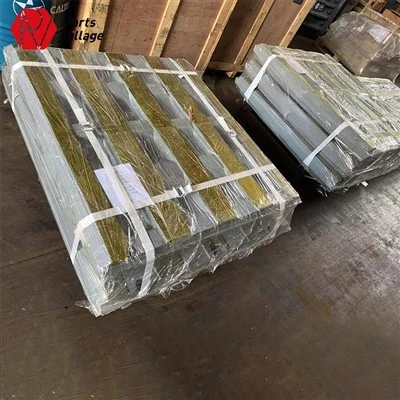
Then, wear part management—don’t wait until they break. Wear parts (rotor tips, inner liners, impact plates) are the single biggest ongoing cost for vertical compound crushers, and most people either replace them too early or too late. Replacing them too early throws good parts away; replacing them too late leads to rotor damage, which costs way more to fix than the parts themselves. Here’s the trick: track your wear part life with a simple log. Note how many tons of material you processed between each replacement, and which feed type you used (hard rock vs. soft aggregate). For example, rotor tips last 1,200 tons on limestone but only 600 tons on granite—so you don’t need to swap them out at the same interval for every job. Another thing: don’t cheap out on generic wear parts. I know, some vendors will sell you half-price parts, but they’re made from low-grade steel that wears out twice as fast. We supply high-chrome alloy wear parts that last 2x longer, and even though they cost 15% more upfront, you save 25% over time because you don’t replace them as often. I’ve seen a client who switched to our wear parts go from replacing rotor tips every 3 weeks to every 6 weeks—huge difference.
Wait, let’s not sleep on crusher alignment and regular maintenance. A lot of operators only service their crusher when it stops running. That’s a recipe for disaster. Even a small misalignment (1/8 inch off on the rotor) can cause 15% more vibration, which wears out bearings and motor mounts way faster. Do a 10-minute check every day: make sure the rotor bolts are tight, the bearings are properly lubricated (not too much, not too little—over-lubricating builds heat that ruins bearings), and the hopper isn’t tilted. Then, every 3 months, do a deep check: pull the rotor to inspect for cracks, test the oil in the motor, and tighten all mounting bolts. We have a free maintenance checklist we send to all our clients—no strings attached. One client skipped a maintenance check and had a rotor crack that cost $4,000 to repair plus 2 weeks of downtime. A 20-minute check would’ve prevented that.
Another underrated tip: optimize your discharge setup. The discharge chute and conveyor that carry crushed material away from the crusher should be sized just right. If the chute is too narrow, material backs up, forcing the crusher to push harder to empty—again, wasting power. If it’s too wide, you’re wasting space and possibly spilling material (that’s lost product, which is a cost in itself). For vertical compound crushers, the discharge gap (the opening at the bottom of the crusher) should be set 1/4 inch smaller than the desired final product size. Let the conveyor move at a speed that matches the crusher’s output—no faster, no slower. We’ve adjusted the discharge setup for clients and seen them cut material waste by 10% and power use by 8%.
Oh, and here’s a pro tip for when you’re dealing with wet material: if your feed has more than 5% moisture, that’s a problem. Wet material clumps together, sticks to the inner chamber, and clogs the crusher. You can either dry the feed slightly (even just letting it sit in the sun for a day works) or add a small amount of anti-clumping agent (for sticky clay, for example). We had a client in a humid area who was dealing with constant clogging—they started running their feed through a simple drying screen, and their downtime for clogging went from 8 hours a week to less than 1 hour. That’s not just saving labor; it’s keeping production on track so you’re not missing deadlines and losing revenue.
Wait, I need to make this real—let’s talk about a actual client example. Last year, a small aggregate plant in Texas was spending about $18,000 a month on their vertical compound crusher. They were replacing wear parts every 3 weeks, their power bill was $5,200 a month, and they had 12 hours of downtime a week. We walked them through the steps: added a pre-screen, switched to our high-chrome wear parts, installed a VFD, and adjusted their discharge setup. Six months later, their crusher costs dropped to $12,200 a month—that’s a 32% reduction. No new machine, no extra labor, just tweaking how they operated what they already had. That’s the kind of result you can get if you stop treating your crusher like a set-it-and-forget-it machine.
Now, let’s clear up a common myth: you don’t need to buy a new vertical compound crusher to cut costs. Sure, newer models have better efficiency, but most existing crushers can be tuned, upgraded, and maintained to run almost as well as a new one for a fraction of the cost. The key is paying attention to the small stuff that adds up.
Let me wrap this up: cutting vertical compound crusher operation costs isn’t about skipping maintenance or using cheap parts. It’s about being intentional with your feed, your power use, your wear parts, and your maintenance schedule. All of these steps are easy to implement, and they add up to big savings over time.
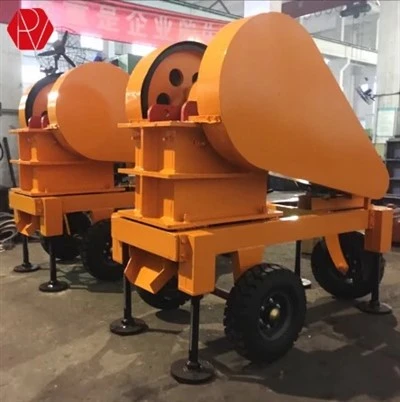
If you’re looking to tweak your current setup, or you’re in the market for a vertical compound crusher that’s built to run efficiently, reach out to our team for a no-obligation consultation. We’ll walk through your current operation, point out where you’re wasting money, and help you put together a plan to cut costs without losing production.
Crushing Equipment References
- Mining & Quarry Association. (2022). Cost Optimization for Industrial Crushing Equipment.
- Industrial Motor Systems Analysis. (2021). Energy Efficiency in Rotor-Driven Crushing Machines.
- Wear Part Lifespan Study: High-Alloy Steel for Crushers. (2023). Journal of Aggregate Processing Technology.
Hangzhou Cohesion Technology Co., Ltd.
As one of the most experienced vertical compound crusher manufacturers and suppliers in China, we also support customized service. We warmly welcome you to buy advanced vertical compound crusher at competitive price from our factory. If you have any enquiry about quotation, please feel free to email us.
Address: No.182 ChaoHui Road, HangZhou, China
E-mail: sales@partsvillage.cn
WebSite: https://www.china-stonecrushers.com/
