Hey there! If you’re reading this, chances are you’re either a facilities manager at a church, a volunteer who’s ever stayed late setting up for a bake sale, or maybe just someone who’s noticed how big and drafty church buildings can get — especially during those crowded holiday services (hello, Christmas Eve with 500 people crammed into a space that’s usually half-empty). Lately, I’ve been getting a ton of questions from folks in church leadership: “Can we actually use a fire exhaust fan in our space?” As a fire exhaust fan supplier, I work with all kinds of buildings — office towers, warehouses, schools — but churches? That’s a whole different ballgame, one that’s made me dig deep to make sure I’m giving the right, practical answers. Let’s break this down, no stuffy jargon, just real talk for anyone who cares about their congregation’s safety. Fire Exhaust Fan

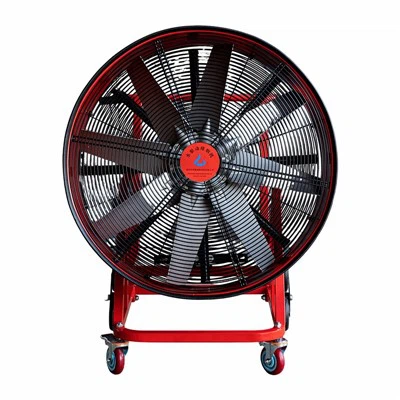
First off, let’s get one thing straight: a fire exhaust fan isn’t your typical ceiling fan you use to cool down the sanctuary. It’s a specialized piece of kit, designed specifically for smoke and heat — the real killers in a fire. Most people don’t realize that in a structure fire, you’ve got only a few minutes before smoke inhalation takes over, way faster than flames do. A fire exhaust fan’s job is to pull that toxic, hot air out of the building fast, and bring in fresh, clean air (from safe areas outside, obviously) so people can escape, and firefighters can do their jobs without stumbling through a smoke-filled maze. But churches? They’re weird. They have high vaulted ceilings, stained glass windows, nooks and crannies like crypts, pipe organs, old wooden pews that are basically firewood, and sometimes they’ve got basements or even attics that are easy to miss. So does this fan even fit into that messy, one-of-a-kind space? Short answer: yes — but only if you do it right.
Let’s start with why churches actually need this more than a lot of other small buildings. Think about it: a lot of churches were built decades, even centuries, ago. Their electrical systems? Not always up to code. The wiring might be old, the outlets scattered, and if someone’s using a space heater in the basement for the youth group, that’s a real fire hazard. Then there are the materials: wood pews, wooden floor beams, fabric banners, carpet — all super flammable. And when a fire breaks out, where do people go? The exits are often limited, especially if the church is a historic building where you can’t just add a bunch of new doors. That’s where a fire exhaust fan comes in. It’s not just about pulling out smoke — it’s about creating a clear escape path. Without it, smoke will fill the nave in minutes, making it impossible for people to see even a few feet in front of them. A fire exhaust fan can cut that escape time by half, easy.
But wait, before you go ordering one online, there’s a big catch. Fire exhaust fans aren’t one-size-fits-all. For a small chapel (say, 50 people, 1,000 sq ft), you don’t need the same fan as a 10,000 sq ft church with a balcony, a kitchen, and a storage area for old hymnals. You’ve got to measure your space: how high are those vaulted ceilings? How many rooms need to be ventilated in a fire — the main sanctuary, the basement, the nursery? That’s where a lot of people mess up. They buy a fan that’s too small, and it doesn’t pull enough smoke, or too big, and it’s wasting energy (not that you want to waste energy in a church that’s always on a budget). As someone who works with suppliers, I always tell churches to get a professional to do a smoke ventilation calculation. It’s not expensive, and it takes like an hour to figure out exactly what fan size you need. For example, a small chapel might need a 12-inch portable fire exhaust fan, while a big mega-church with multiple wings will need a 24-inch fixed fan installed in the roof or a wall.
Another thing: church buildings have all those architectural quirks that regular buildings don’t. Stained glass windows — can you mount a fan there? Probably not, because those windows are priceless. Vaulted ceilings — where do you put the ductwork that connects the fan to the space you’re ventilating? You can’t just drill a hole anywhere and call it a day, especially if it’s a historic building where drilling might damage the structure. That’s why I always recommend portable fire exhaust fans for smaller churches or historic spaces, because you can move them around to where they’re needed most, and you don’t have to permanently alter the building. For a big modern church with a flat roof? A fixed exhaust fan is way more efficient, because it’s always there, ready to kick on automatically if a fire is detected.
Wait, let’s talk about how these fans actually work, because I think a lot of people don’t get that. A fire exhaust fan is paired with a smoke detector system that triggers it as soon as smoke is spotted. It doesn’t just turn on randomly — it’s linked to the building’s fire alarm. When the alarm goes off, the fan starts pulling smoke out of the highest point of the building (where smoke always rises) and pushing it outside. That’s key, because if you pull smoke from the bottom, you’re just stirring it up and making it worse. For a church, that means mounting the fan near the peak of the vaulted ceiling, or the roof, so it’s pulling the smoke before it fills the whole space.
I’ve had so many churches reach out to me saying, “But our church is old, we can’t afford a big expensive fan.” I get it — churches live on donations, bake sale profits, and maybe a small grant. The good news is that fire exhaust fans don’t have to break the bank. Portable ones are super affordable, like a few hundred bucks, which is way less than the cost of a single fire insurance claim or a lawsuit if someone gets hurt. Fixed fans are pricier, but there are a lot of grant programs for non-profits (and churches are non-profits, right?) that help cover the cost. Plus, installing a fire exhaust fan can actually lower your insurance premiums, which is a win for your budget.
Let’s not forget about accessibility. A lot of churches have ramps for people with disabilities, but what about in a fire? If smoke fills the space, a fire exhaust fan can keep the access path clear so people in wheelchairs can get out. I worked with a church in Ohio last year that had a youth group member with cerebral palsy, and they told me that the fan made all the difference during a fire drill — the smoke was pulled out so fast, she didn’t even have to wait for her caregiver to carry her out. That’s the stuff that matters, right? It’s not just about boxes on a checklist — it’s about keeping your congregation safe.
Now, let’s talk about some common mistakes churches make when installing (or not installing) a fire exhaust fan. First, they wait until after a bad scare. I’ve seen churches that only think about safety after a small fire in the kitchen, or a smoke alarm went off in the middle of a service (thankfully no fire). Don’t wait for a crisis — get the fan now. Second, they forget about maintenance. A fire exhaust fan is like a fire extinguisher — you can’t just buy it and forget it. You need to test it every six months, make sure the blades aren’t stuck, the cord isn’t frayed (for portable ones), and it’s linked to the fire alarm properly. I always remind my church clients to add fan maintenance to their yearly facility checklist, along with checking the smoke alarms and the heating system. Third, they get a fan that’s not rated for fire use. A regular box fan won’t work — it can’t handle the high temperatures of a fire, and it won’t pull enough smoke. Make sure the fan is certified for fire smoke ventilation, that’s non-negotiable.
Wait, what about churches that have multiple levels? Like a main sanctuary upstairs and a basement for Sunday school. Do you need a fan for both? Absolutely. Fire can start in the basement, where there’s less ventilation, and smoke will rise up to the main floor in seconds. A portable fan can be moved down to the basement to pull smoke out there, and another one can be in the main sanctuary to pull smoke out of the upper level. That way, you’re clearing both escape paths at the same time. I had a church in Pennsylvania tell me that they almost missed a small fire in the basement because the smoke didn’t trigger the main smoke alarm — but because they had a portable exhaust fan in the basement, they saw the smoke early and put it out before it spread. That’s exactly what these fans are for.
Let me also address the elephant in the room: historic churches. A lot of historic church leaders think, “We can’t modify our building with a fan, it would ruin the architecture.” I get that — those buildings are part of the community’s history. That’s why portable fire exhaust fans are such a great option here. You can set them up near a window or a door during services, and put them away when the service is over. No drilling, no permanent changes, no ruining the stained glass or the carved woodwork. I recently worked with a historic church in Boston that had a problem with smoke filling the nave during funerals, and they didn’t want to add a hole in their 100-year-old ceiling. We set up two 14-inch portable exhaust fans by the side windows, and it worked perfectly. The smoke was pulled out fast, and the congregation didn’t even notice the fans were there, except that the air was clear.
Another question I get a lot: “Can we use a regular exhaust fan, like the ones in our kitchen?” No, absolutely not. Kitchen exhaust fans are for cooking fumes, not for fire smoke. They’re not built to handle the heat of a fire, and they don’t have enough power to pull large amounts of smoke out of a big space like a church. A fire exhaust fan is engineered specifically for high-temperature environments, and it has the CFM (cubic feet per minute) rating to move enough air to clear a large room. That’s a key number — CFM is how much air the fan can move in a minute. For a small chapel, you want at least 1,000 CFM, for a large church, 5,000 CFM or more. Get that wrong, and the fan is useless.
Now, let’s talk about why I’m passionate about this. I’ve been a fire exhaust fan supplier for 10 years, and I’ve seen way too many close calls in churches. Last year, I was at a small church in Indiana that had a electrical fire in the basement storage area. The smoke filled the main sanctuary in 90 seconds, and the congregation was able to evacuate easily because the church had two portable fire exhaust fans set up near the sanctuary doors. If they didn’t have those fans, who knows what could have happened. That’s when I realized: churches are such a special part of communities, and they often get overlooked when it comes to fire safety. They’re not office buildings, they’re homes for people, for weddings, for funerals, for youth groups — they’re where memories are made, and they need to be safe.
So, back to the original question: Can a fire exhaust fan be used in a church? Yes, 100% — but only if you pick the right type, size, and install it correctly. It’s not a luxury, it’s a necessity. Think about it: when you host a big event, you make sure the venue has fire extinguishers, smoke alarms, a sprinkler system — a fire exhaust fan is just another piece of that safety puzzle. It’s there to give your family, your congregation, the extra few minutes they need to get out if something goes wrong.
If you’re a church leader, a facilities manager, or even a volunteer who’s been tasked with this, don’t hesitate to reach out for more info. I can help you figure out what size fan you need, whether portable or fixed, and even connect you with someone who can do the smoke calculation for your space. We all want our churches to be places of peace and worship, not places of fear, and a fire exhaust fan is one easy way to make sure everyone stays safe.
Don’t wait until it’s too late. Reach out today to chat about your church’s fire exhaust needs — we can go over options, answer all your questions, and get you set up with a fan that fits your space and your budget. It’s the small step that can make a huge difference.
Rescue Air Cushion References
- National Fire Protection Association (NFPA) 101: Life Safety Code, Chapter 19 – Places of Worship
- NFPA 204: Standard for Smoke and Heat Venting
- International Code Council (ICC) – Fire Code, Section 909: Smoke Control Systems
- Occupational Safety and Health Administration (OSHA) – Fire Safety for Non-Profit Workplaces, including Religious Organizations
- Fire Protection Association (FPA) – Smoke Ventilation for Historic Buildings
Taizhou Mingxin Fire Protection Technology Co., Ltd.
As one of the most professional fire exhaust fan manufacturers in China, we warmly welcome you to buy bulk high quality fire exhaust fan made in China here from our factory. Good service and low price are available.
Address: Group 3, Xinzhouqiao Community, Jingtai Road Subdistrict, Hailing District, Taizhou City (within Taizhou Station North Logistics Management Co., Ltd.)
E-mail: mingxinxf@163.com
WebSite: https://www.mxfiretech.com/
