As a farm tractor attachments supplier who has spent the last 12 years working directly with farmers, I can say without hesitation that custom-making farm tractor attachments isn’t just possible—it’s one of the most underrated solutions modern agriculture has to offer. I’ve sat in dozens of tractor cabs across the Midwest and Great Plains, listening to farmers complain about mass-produced attachments that don’t fit their unique land, crop, or workflow. One of my regular customers, a third-generation corn and soybean farmer in Iowa named Tom, still tells me about the time he spent three extra hours a day struggling with a generic tiller that kept snagging on the uneven slopes of his 40-acre field. “The store-bought stuff works for the guy with the 100-acre flat field, but mine’s got hills, rocks, and I plant cover crops too,” he told me. That’s where custom attachments come in—they’re built for your farm, not a one-size-fits-all blueprint. Farm Tractor Attachments
Let’s start with the basics: what does a custom farm tractor attachment even mean? It’s not some overpriced, hand-made gimmick. A good custom attachment is designed using your tractor’s exact specifications, your field’s unique features, and your crop’s specific needs. For example, if you farm organic vegetables in New England, you might need a transplanter that fits between narrow row beds, has adjustable seed depth, and doesn’t leave marks that would hurt your produce’s marketability. If you raise cattle in Texas, you might need a feeder that fits your existing feed bunk layout, handles large round bales, and is light enough to maneuver over soft pastures without compacting the soil. Mass-produced attachments can’t account for all these variables, which is why so many farmers end up modifying their store-bought models themselves—welding on extra parts, cutting frames down, adjusting tines—only to waste time and money on fixes that should have been done right the first time.
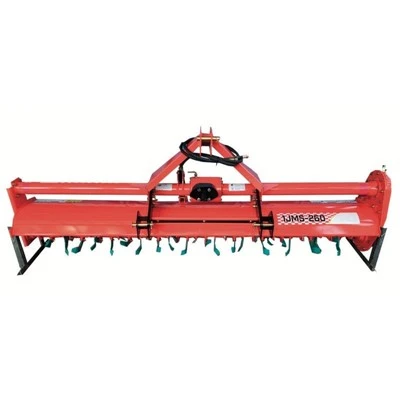
The science behind custom attachments is solid, too. Modern metal fabrication and 3D modeling technology have made it easier than ever to turn a farmer’s sketch or verbal request into a working piece of equipment. When a farmer comes to me with an idea, the first step is always a site visit (or a video call if they’re too far away) to measure their tractor’s three-point hitch—this is the standard mount for most attachments, and getting its dimensions exact is non-negotiable. We take note of their field’s slope, soil type, and any obstacles like tree lines or irrigation lines that mass-produced attachments might not accommodate. Then, we work up a design: for a hay farmer with rocky ground, that might mean a rake with tines spaced wider to avoid catching on rocks, or a baler wrapper with a reinforced frame to handle rough terrain. For a vegetable grower, it could mean a cultivator with adjustable sweeps that can move between 12-inch rows without damaging young plants. This isn’t guesswork; it’s based on decades of agricultural engineering and feedback from farmers who actually use the equipment day in and day out.
I know what some of you are thinking: “Custom attachments are way too expensive.” It’s a common myth, but it’s not always true. Sure, a custom attachment might cost a bit more upfront than a mass-produced model, but the long-term savings add up fast. Let’s go back to Tom, the Iowa corn farmer. He bought a generic tiller for $1,800, but spent $300 on modifications and 10 extra hours a week tilling his uneven field. When we built him a custom tiller two years later, built to fit his tractor and matched to his field’s slope, it cost him $2,100. But he cuts his tilling time in half, no longer needs to make modifications, and the tiller has lasted three years with almost no repairs—compared to his generic model, which needed new tines every season. For small farms, that difference is huge. A custom attachment might seem like a big investment at first, but when you factor in time saved, less fuel use (a properly fitted attachment doesn’t strain your tractor’s engine), and fewer repairs, it often pays for itself in 12 to 18 months. And for farmers with very specific needs—like a grape grower needing a vine pruner that fits between rows—there’s no mass-produced option at all. Custom isn’t just a choice; it’s the only choice.
Of course, there are a few things to keep in mind if you’re thinking about a custom attachment. First, make sure you work with a supplier who has experience in agricultural equipment, not just general metal work. A welder who builds car parts won’t understand the stress a tiller or plow goes through, or how to design an attachment that won’t damage your tractor’s hitch. Second, bring as much detail as you can to the conversation. The more you tell us about your farm, your crops, and the problems you’re having with existing attachments, the better the final product will be. A sketch on a napkin, a video of you struggling with a generic rake, or even photos of your field all help. Third, be patient. Custom attachments aren’t made on a assembly line, so they take a bit longer to build. Most of our custom orders take two to four weeks, depending on the complexity, but that wait is worth it for a piece of equipment that actually works for you.
I’ve seen this first-hand with a customer named Maria, who runs a 25-acre organic farm in Vermont. She was tired of buying generic seeders that either planted seeds too deep (killing the small seedlings) or too shallow (getting washed away in rain). She came to us with a request for a seeder with adjustable seed depth, narrow enough to fit her 12-inch rows, and light enough to pull with her small 25 horsepower tractor. We worked with her to design a seeder that’s built with a lightweight aluminum frame (to avoid compacting her soil), has individual seed tubes that can be adjusted for depth, and tines that set exactly for her row spacing. When she picked it up, she texted me a photo of her seeding spinach, saying “I didn’t have to adjust a single thing. It’s perfect.” That’s the kind of satisfaction you can’t get from a store-bought attachment.
Another common misconception is that custom attachments only work for small tractors. That’s not true either. We’ve built custom loaders for large tractors that fit specific farm trucks, spreaders for commercial grain operations that handle large volumes without clogging, and even tree planters for orchards that are shaped to fit between orchard rows. No matter the size of your tractor or the scale of your operation, a custom attachment can be designed to meet your needs. We even work with hobby farmers who have small garden tractors—one customer in Ohio had us build a small cart that fits his garden tractor and can carry tools, seed bags, and even small animals, which he uses to move supplies around his 5-acre farm.
So, is it possible to custom-make a farm tractor attachment? Let’s be clear: it’s not just possible—it’s one of the best decisions you can make for your farm. The days of settling for attachments that almost work are over. With modern design, skilled fabrication, and suppliers who understand agriculture, you can get an attachment that’s built exactly for your tractor, your field, and your crops. It saves you time, cuts down on repairs, and makes your day-to-day work a lot easier.
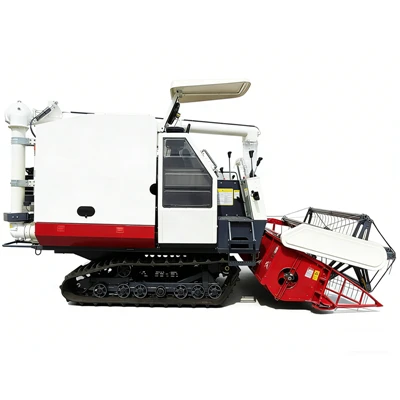
Rice Combine Harvester I’ve been in this business long enough to know that every farm is different. What works for one farmer might not work for the next, and that’s the beauty of agriculture. A custom attachment acknowledges that uniqueness, instead of ignoring it. If you’re tired of generic attachments that don’t quite fit, or you have a specific need that no store-bought model can fill, now is the time to reach out. We can walk through your needs, answer your questions, and help you design an attachment that makes your work on the farm less stressful and more productive. Don’t settle for “good enough” when you can have “perfect for your farm.”
References
- American Society of Agricultural and Biological Engineers. (2021). Agricultural Attachment Design and Fit Standards. ASABE Press.
- USDA National Agricultural Statistics Service. (2022). Farm Equipment Customization Trends for Small and Mid-Sized Operations. USDA Publications.
- Miller, J. (2020). The Economics of Custom Agricultural Equipment for Family Farms. Journal of Farm Management, 14(3), 45-58.
- National Institute of Food and Agriculture. (2019). Innovations in Small Tractor Attachment Design. NIFA Technical Bulletin.
Huzhou Liangyi Agro Machinery Co., Ltd.
As one of the most professional farm tractor attachments manufacturers and suppliers in China, we have world-leading production equipment and strong manufacturing capabilities. Please rest assured to wholesale advanced farm tractor attachments from our factory. Contact us for more cheap products.
Address: High-Tech Industrial Zone, Huzhou City, Zhejiang Province, China
E-mail: Liangyi_agro@126.Com
WebSite: https://www.cnliangyi-agro.com/
