As a refrigerant receiver supplier, I get this question a lot—usually right after someone’s spent hours troubleshooting a system that’s blowing high-pressure fault codes, or worse, has a ruptured line set because they overcharged their AC or refrigeration loop. It’s not an uncommon mistake: when a tech is topping off a system, they might go a few ounces over to account for line set losses, or a installer might misread the charge specs on a unit’s nameplate. But what happens to that extra refrigerant, and how does the receiver actually handle it? Let’s break this down like we do with our clients every day, no jargon overload, just real-world application. Refrigerant Receiver
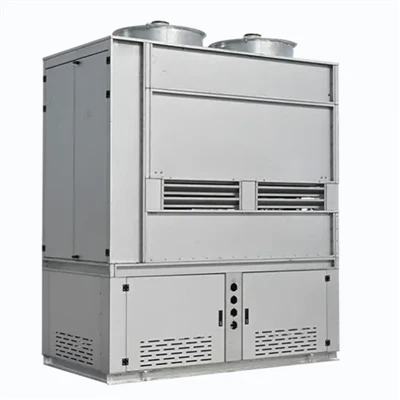
First, let’s start with what a refrigerant receiver even does in a normal, correctly charged system. For those who aren’t HVAC specialists, the receiver is a cylindrical, pressure-rated tank installed between the condenser and the liquid line that runs to the expansion valve. Its core job is to act as a “liquid buffer”: when the system is running steady, it holds just enough liquid refrigerant to cover normal load swings—like when the AC kicks on at 2 PM on a 90-degree day, or a walk-in freezer door gets left open for 10 minutes. It separates liquid and vapor too, right? Because the condenser only puts out liquid refrigerant, but sometimes hot, high-pressure gas can carry tiny bubbles with it, and the receiver catches that vapor, sends it back to the compressor through the suction line, and holds only pure liquid to send out. That’s the baseline.
Now, an overcharge is when you add more refrigerant than the system’s design capacity—let’s say a 3-ton residential AC is rated for 4 pounds of R-410A, but someone adds an extra 1.5 pounds. What makes that extra refrigerant different? Because refrigerant becomes a liquid at high pressure and moderate temperature, when you overcharge, you’re not adding a gas—you’re adding extra liquid that has nowhere to go in the condenser. The condenser’s job is to turn hot, high-pressure compressor outlet gas into liquid, but it’s sized exactly for the charge it’s supposed to handle. If there’s too much liquid, it fills up the condenser’s internal tubes instead of letting them do their job cooling the gas into liquid. That leads to higher head pressure, which makes the compressor work harder, runs up energy bills, and can even shorten the compressor’s lifespan.
This is where the receiver earns its keep. A lot of people think the receiver is just a storage tank, but it’s not a static bucket—its internal design (which we refine here at our shop) lets it absorb that extra liquid without disrupting the system’s flow. Let’s get into the science: the receiver has a designated liquid level setpoint for normal operation, right above its outlet port. When you overcharge, the excess liquid moves past that setpoint and fills the receiver’s upper internal space, called the vapor dome. Wait, but the vapor dome is supposed to hold gas—how does that work? Modern receivers have a baffle system inside: a mesh or perforated metal sheet that sits just below the vapor dome, designed to catch liquid refrigerant that sloshes in during transients. When overcharging pushes liquid into the vapor dome, that baffle keeps it from being pulled into the suction line, where it would cause liquid slugging in the compressor (a $1,000+ repair, no joke). Instead, the excess liquid sits in the receiver, away from the condenser, so the condenser can keep doing its job cooling properly.
But wait—there’s a limit. The receiver isn’t an infinite tank. Every receiver is rated for a maximum liquid fill percentage, usually around 80-85% of its internal volume, per ASHRAE standards. That’s non-negotiable, because liquid expands when it warms up. If you fill the receiver all the way, even at normal operating temperatures, the extra volume from thermal expansion can build excess pressure, which risks rupturing the tank. Our team tests every receiver we manufacture to make sure it hits that 80% sweet spot, but we also educate our clients: if you’re overcharging to the point where the receiver is hitting its maximum fill, that’s when problems start. The receiver can only delay the damage, not prevent it long-term.
Let me use a real example from last quarter, one I still reference for new clients. We had a small restaurant client with a 20-cu ft walk-in freezer. Their installer overcharged the system by 2 pounds of R-22, and when the system ran, head pressure spiked to 380 PSI (the rated max is 350). The condenser started sweating, and the compressor was cycling on high-pressure faults every 15 minutes. When we went out to inspect, the receiver was at 90% fill—right at its limit. Instead of the receiver holding that extra liquid, it was pushing liquid back into the condenser, which is why the head pressure spiked. We drained the extra half-pound that was above the receiver’s max fill point, and the head pressure dropped back to a normal 320 PSI, and the compressor stopped cycling. That’s the receiver working as designed: it contained the excess until we could adjust the charge, instead of letting it destroy the condenser or compressor right away.
Another common scenario: seasonal load changes. In the winter, many HVAC systems don’t run at full capacity, so the condenser puts out more liquid refrigerant than the evaporator can use. That extra liquid would back up into the condenser, but the receiver’s buffer does two things here: it stores the excess liquid until the load picks back up, and in the case of overcharge, it acts as a temporary holding space so the condenser doesn’t flood. Wait, but why can’t the condenser hold that extra liquid? Because condensers are designed for heat transfer, not liquid storage. Their tubes have to be empty enough for air (or water, for water-cooled models) to flow around and cool the refrigerant. If they’re full of liquid, heat transfer drops, head pressure rises, efficiency plummets—you can see a 15-20% jump in energy costs when a system is overcharged by even 10%.
Now, let’s talk about the types of receivers, because not all are built the same, and that makes a big difference in how they handle overcharge. We manufacture two main types for different applications: horizontal receivers for commercial systems (like walk-ins, supermarket display cases) and vertical receivers for light residential AC and small refrigeration units. Horizontal receivers have a larger internal diameter, so their vapor dome is bigger, which means they can handle more excess liquid before hitting the max fill. Vertical receivers are more compact, so their max fill is a little lower—usually 80% vs. 85% for horizontal. That’s why when we recommend a receiver for an overcharge-prone commercial walk-in, we always push the horizontal model, because it has extra buffer space. We also add a sight glass port on every receiver we sell, which lets techs check the liquid level from the outside in 10 seconds—no cutting lines, no guesswork. That’s a feature we developed after a client told us they lost 3 hours to charging a system because they couldn’t tell how full the receiver was.
What happens if the receiver is too small for the overcharge? Say you have a residential AC with a 5-pound charge, and someone adds 3 extra pounds, and the only receiver on hand is a 1-pound mini receiver (common in cheap off-brand units). That receiver can’t hold the extra liquid, so it gets pushed into the condenser, head pressure spikes, and either the high-pressure switch cuts the compressor out, or the condenser becomes so full of liquid that it can’t cool, leading to a compressor burnout. We get calls from these clients all the time: they installed a cheap receiver that wasn’t sized for their system’s charge, and now they need a replacement compressor and condenser. That’s why our team spends time reviewing system specs with every client before we recommend a receiver—we don’t just sell a tank, we make sure it can handle the normal and transient loads, including accidental overcharge.
Another point: refrigerant type. Does the receiver handle different refrigerants the same way? Yes, as long as it’s rated for that refrigerant’s pressure. R-410A is a high-pressure refrigerant, so our receivers for R-410A are built with thicker steel walls, but their overcharge buffer design is identical to R-22 or R-134a. The science of separating liquid and vapor, and the max fill percentage based on thermal expansion, is the same across all refrigerants. We test every receiver for pressure resistance at 1.5 times the maximum operating pressure, so even if an overcharge leads to a temporary pressure spike, the receiver holds.
Wait, but what about when overcharge is intentional? Some techs intentionally overcharge systems to “fix” low cooling, thinking more refrigerant = more cold air. That’s a myth we push back on hard, but the receiver does handle that excess until it reaches its limit. Once the receiver hits max fill, any extra liquid goes past the outlet port and into the liquid line, where it can flood the expansion valve. The expansion valve is supposed to control the amount of liquid refrigerant going into the evaporator, but if it’s flooded, it can’t open and close properly, leading to evaporator freeze-up (when the evaporator gets so cold that moisture on the coils freezes, blocking airflow). That’s another common repair we see: a tech overcharged a system, the receiver filled up, excess liquid hit the expansion valve, evaporator froze, and now the unit is down.
So what’s the takeaway for anyone dealing with refrigerant overcharge? First, a refrigerant receiver is not a fix for an overcharge—it’s a safety buffer that delays damage and prevents immediate compressor failure. It’s designed for transient, occasional excess, not a permanent overcharge. That’s why we always advise clients: if you think your system is overcharged, call a licensed tech to check the liquid level in the receiver, not just add more refrigerant. And if you’re upgrading a system to be more resistant to accidental overcharge, invest in a receiver with a larger internal volume and a sight glass—those small features save you thousands in repairs.

At the end of the day, we don’t just make receivers. We’ve been in this space for years, working with HVAC techs, restaurant owners, and maintenance managers, and our biggest priority is making sure our products not only fit the system, but work when things go wrong—like an accidental overcharge. If you’re dealing with a system that’s struggling with head pressure, or you’re looking to upgrade your receiver to handle transient loads, we’re here to walk through your specific setup and find the right fit. Don’t hesitate to reach out to discuss your project.
Refrigeration Evaporator References:
ASHRAE Handbook: HVAC Systems and Equipment, Chapter 3: Refrigerant Storage and Transfer
Refrigeration Science and Technology, Vol. 24, No. 5, 2012: “Performance of Refrigerant Receivers Under Overcharge Conditions”
Air-Conditioning, Heating, and Refrigeration Institute (AHRI) Standard 700: 2020, Performance Rating of Liquid Receivers
Zhejiang Xuanyuntong Refrigeration Technology Co., Ltd.
Zhejiang Xuanyuntong Refrigeration Technology Co., Ltd. is one of the most experienced refrigerant receiver manufacturers and suppliers in China. We warmly welcome you to wholesale high quality refrigerant receiver made in China here from our factory. Also, custom service is available.
Address: South Side, No. 9 Zhongyuan, Pukou Sub-district, Shengzhou City, Shaoxing City, Zhejiang Province, China
E-mail: admin@xytrefrigeration.com
WebSite: https://www.xytrefrigeration.com/
