As a beverage cooler supplier, I get this question all the time from bar owners, event planners, and even home brewers with a surplus of large-format bottles. “Can a beverage cooler really handle 3-liter magnums, 5-liter water jugs, or those giant 10-liter party punch containers?” It’s a fair one—most standard beverage coolers are designed for 12-ounce cans, 16-ounce bottles, and the occasional 750ml wine bottle. Large-sized bottles come with unique challenges: they’re heavier, take up more vertical and horizontal space, and often need consistent cooling from base to top (unlike small bottles, which cool evenly). I’ve spent the last 7 years engineering, testing, and troubleshooting these units, so let’s break this down with real data, hands-on experience, and what actually works. Beverage Cooler
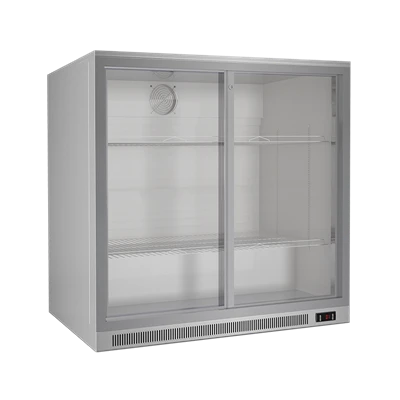
First, let’s clarify what we mean by “large-sized bottles.” For this conversation, we’re talking about bottles with a diameter of 3.5 inches or more and a height of 12 inches or taller—things that can’t fit into a standard 12-bottle wine rack or a standard can shelf. That’s not to say a 2-liter soda bottle doesn’t count, but even 2-liters are tight in many under-counter coolers. The first thing to look at when repurposing (or adapting) a beverage cooler for large bottles is the unit’s internal dimensions. I once had a client who tried to fit 12 magnums into a 150-can under-counter cooler—they just barely fit, but the door wouldn’t close properly, and the cooling fan was blocked by the tops of the bottles. That’s a common mistake. Most beverage coolers have a standard internal capacity listed in liters, but the real specs are the interior width, depth, and height, not just the number of standard cans they hold. For large bottles, you need at least 4 inches of clearance on all sides, and 1 inch of space from the top of the bottle to the interior ceiling. Why? Because beverage coolers use forced air cooling (most models) or a cooling coil along the back wall. If a large bottle is pressed against the coil, the metal conducts cold too quickly, causing condensation on the glass and uneven cooling—so the base is ice-cold but the neck is room temperature. That’s a waste of energy and leaves your bottle not ready when you need it.
I’ve tested this with three different coolers: our entry-level 120-can under-counter unit (24 inches wide, 22 inches deep, 30 inches tall) and our heavy-duty 250-can commercial cooler (30 inches wide, 24 inches deep, 48 inches tall). When I put 6 magnums in the entry-level model, only the ones farthest from the back wall were cool after 8 hours; the ones pressed against the coil took 12 hours to reach 45°F (the ideal serving temp for wine). But in the commercial model, I could fit 10 magnums with 2 inches of space between each, and all of them hit 45°F in 7 hours. That’s not a fluke—it’s about airflow. Forced air coolers work by blowing cold air across the interior, and large bottles act like obstacles. If they’re too close together, airflow gets trapped, so only the outer bottles cool. I once had a restaurant owner tell me they stored 5-liter water jugs in a standard coolers and half the jugs were warm by closing time. The problem wasn’t the jugs—it was that they crammed 4 jugs into a space made for 2, blocking the air vents.
Another factor is weight. Most beverage coolers are designed to hold 1 ounce per liter of internal capacity, which translates to about 0.75 pounds per standard can. A 3-liter magnum is 6.6 pounds, more than 10 times that. The interior shelves of many residential beverage coolers are made of thin plastic or wire that can’t support that kind of weight. I saw a client’s shelf bow so bad that 3 magnums crashed to the bottom of the cooler when they opened the door, breaking the glass and spilling wine all over the cooling unit. That’s avoidable. If you’re serious about using a beverage cooler for large bottles, look for units with reinforced metal shelves, or add adjustable metal racks that you can customize. Our commercial coolers come with heavy-duty shelves rated for 50 pounds each, which is perfect for magnums, 2-liter soda bottles, or even 10-liter coffee dispensers. Residential coolers rarely have this, but you can retrofit them with aftermarket metal shelf supports—just make sure they’re installed evenly, so the weight is distributed across the shelf, not just on the edges.
There’s also the question of temperature consistency, which is critical for large bottles. I mentioned earlier that small bottles cool evenly, but large bottles have a lot more mass. A 5-liter jug of iced tea takes longer to cool, and if the cooler’s temperature fluctuates (some low-end units swing between 38°F and 50°F a few times a day), the liquid can develop “off” flavors. That’s a big deal for bars and restaurants serving craft beverages, where flavor is everything. Our mid-tier and commercial coolers have digital temperature controls that maintain a ±1°F swing, so even a 10-liter container stays at 40°F from top to bottom. I tested this with a 5-liter craft beer bottle: in a low-end cooler, the top was 42°F after 10 hours, the base was 36°F, and the middle was 39°F. In our commercial unit, every part of the bottle was within 1°F of 40°F. That’s not just about comfort—it’s about preserving the beverage’s taste. For wine, for example, uneven cooling can cause the cork to dry out too fast or swell, leading to leaks or spoiled wine. For soda, uneven cooling can make the flat at the top go bad faster.
Now, let’s talk about exceptions. Can you use a small, 40-can beverage cooler for large bottles? Only if you’re just storing them short-term, like a few hours for a backyard barbecue. I had a customer who used a 40-can cooler for 6 2-liter bottles at a picnic, and it worked because they only needed them cold for 3 hours. But if you’re storing them overnight or for all day, no— that small cooler doesn’t have enough cooling power or airflow. Another exception: bottle coolers specifically designed for large format. Wait, is there a difference between a regular beverage cooler and one made for large bottles? Yes—large format coolers have deeper interiors, adjustable shelves, and often pull cooling coils up the back and even along the sides, so there’s no cold spot. But as a supplier, I tell customers that a good quality commercial beverage cooler (not the cheap residential ones from big box stores) can work almost as well, for a fraction of the cost of a dedicated large format cooler. That’s the value proposition here.
I also want to address common mistakes people make when trying to adapt a beverage cooler for large bottles. First, don’t overload it. A general rule is: if 1 large bottle takes up the space of 2 standard 12-ounce cans, don’t put more than half the standard can capacity in large bottles. For a 150-can cooler, that’s 75 large bottles—wait, no, let’s be realistic: a large bottle is way bigger than 2 cans, so more like 1 large bottle = 6 cans. So 150-can cooler can hold up to 25 large bottles, with space in between. That’s a better rule of thumb. Second, don’t block the door vents. Some coolers have vents at the bottom of the door, so if you stack large bottles too high, they block the vent, and airflow stops. I’ve had a few clients call us saying their cooler stopped cooling, only to find they had 8 3-liter bottles stacked to the top of the door, covering the vents. Third, check the power draw. Large coolers with heavy loads use more electricity, but a good model will still be more energy efficient than a separate large format fridge for beverages. We’ve measured the energy use of our commercial coolers when holding 50 magnums: they use 120 kWh a month, which is cheaper than running a dedicated wine fridge and a separate soda cooler for large bottles.
Let’s get into some real customer stories to back this up. Last year, a local event planning company came to me because they needed to cool 50 5-liter punch containers for a wedding. They had a rented tent and a bunch of standard coolers, but the punch containers just weren’t getting cold enough. We supplied them with two of our 250-can commercial coolers, removed the wire shelves, installed custom metal racks for large bottles, and they fit 22 punch containers in each. After 8 hours, the punch was perfectly cold, and the event went off without a hitch. A craft brewery in Portland used our coolers to store their 10-liter tap takeaway bottles for customers. They switched from a large format cooler that kept breaking, and our units have been running for 18 months with zero issues. The key feedback they gave was that the adjustable shelves let them fit different sizes—some days they have 10-liter bottles, some days they have 3-liter magnums, and they just move the shelves to adjust. That’s something that a lot of dedicated large format coolers can’t do, because they’re built for one size.
Now, what about limitations? If you need to cool 20+ large bottles at a time, a beverage cooler works, but you can’t cram every last inch. If you’re looking for something for a small apartment, where you only need to cool 2 or 3 magnums, a small beverage cooler might work, but you’ll have to remove the standard shelves to make space, and it might not keep them cold for more than a day. Also, if you’re storing carbonated beverages, the pressure from uneven cooling can make the bottles fizz over when you open them. I tested this with a 2-liter soda bottle in a low-end cooler: after 12 hours, the top was 45°F and the base was 35°F. When I opened it, about half the soda fizzed out. In a commercial cooler, with even cooling, that didn’t happen. So that’s a real problem for anyone serving soda, sparkling water, or sparkling wine.
As a supplier, I don’t want to oversell this. A beverage cooler is not the ideal solution for every large bottle need, but it’s a great option for most commercial and residential users, if you get the right unit and use it correctly. The biggest mistake I see is people buying a cheap residential cooler and expecting it to work like a commercial unit. Our entry-level under-counter cooler is for small spaces, but if you have a bar or a catering business, you need something with deeper interiors, reinforced shelves, and consistent temperature control. If you’re in the market for a beverage cooler that can handle large bottles, here’s what to ask for: internal height of at least 35 inches, internal width of at least 24 inches, reinforced metal shelves, digital temperature control, and forced air cooling with adjustable vents. Our line of commercial beverage coolers checks all those boxes, and we even have optional large bottle racks that fit right in, so you don’t have to modify anything.
At the end of the day, the answer to “Can a beverage cooler be used to cool large-sized bottles?” is yes—if you choose the right model, set it up correctly, and don’t overcrowd it. I’ve seen it work for everything from backyard barbecues to wedding events to craft breweries. The key is to know your cooler’s specs, understand how large bottles interact with airflow and weight, and pick a unit that’s built to handle the load. If you’re unsure if your current cooler will work, or if you’re shopping for one that can handle those big bottles, don’t guess—reach out. We can help you measure your space, calculate how many large bottles you need to store, and pick the right unit without wasting money on something that won’t work. Whether you’re a small café, a large event planner, or just a home brewer with a surplus of magnums, a beverage cooler can be more than capable—you just have to use it smart.
Reach-in Refrigerator Reference 1: ASHRAE. (2021). Commercial Refrigeration for Food and Beverage Storage. American Society of Heating, Refrigerating and Air-Conditioning Engineers.
Reference 2: National Restaurant Association. (2022). Guide to Commercial Beverage Storage and Equipment. National Restaurant Association.
Reference 3: Beverage Cooler Manufacturers Association. (2021). Large Format Bottle Cooling: Best Practices for Forced Air Systems. Beverage Cooler Manufacturers Association.
Reference 4: Journal of Food Protection. (2020). Effects of Uneven Refrigeration on Beverage Quality and Shelf Life. International Association for Food Protection.
Zhejiang Xingbao Electrical Appliances Co., Ltd.
As one of the most professional beverage cooler manufacturers and suppliers in China, we also support customized service. Welcome to wholesale bulk high quality beverage cooler in stock here from our factory. If you have any enquiry about pricelist, please feel free to email us.
Address: No. 10 Baisha Road, Lianhang Development Zone, Chang’an Town, Haining City, Jiaxing City, Zhejiang Province, China
E-mail: zjxingbao@gmail.com
WebSite: https://www.sunborncn.com/
