If you’re in the market for gate valves, you’ve probably come across terms like “Class 150,” “Class 300,” or “PN 16” on product spec sheets. As a gate valve supplier, I can’t tell you how many times I’ve fielded questions from engineers and plant operators asking, “What do these ratings even mean, and how do I make sure I pick the right one for my application?” It’s not as complicated as it sounds, but getting this wrong can lead to leaks, valve failure, or even dangerous process accidents. Today, I’m breaking down how to calculate gate valve pressure rating, straight from the shop floor and years of working with projects across oil and gas, water treatment, and chemical processing. Gate Valve
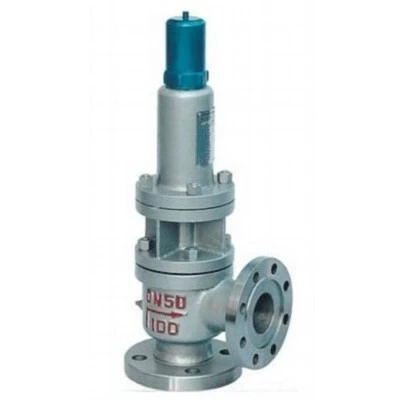
First, let’s start with the basics: what a gate valve pressure rating actually is. At its core, it’s the maximum pressure a valve can safely handle at a specific temperature. The catch? Pressure ratings aren’t one-size-fits-all—they change based on what the valve is made of and how hot the fluid you’re moving is. That’s why you’ll see two common rating systems out there: ANSI Class (used mostly in North America) and PN (Nominal Pressure, used internationally). I’ll walk through both, but let’s stick to the science first before we get to calculation steps.
Let’s take an example: a Class 300 gate valve. That doesn’t mean it handles 300 PSI across all temperatures. For standard carbon steel (ASTM A216 WCB, the most common material for general applications), the maximum working pressure at 100°F is actually 720 PSI. But crank that temperature up to 400°F, and that number drops to 510 PSI. Hit 600°F, and it’s down to 290 PSI. That’s a key point I wish more people realized: as temperature rises, material strength decreases, so pressure ratings have to adjust.
So, how do you calculate the correct pressure rating for your gate valve? Let’s break it down step by step, with real context from my work as a supplier.
Step 1: Know your system’s design conditions. This is non-negotiable. Before you even look at a valve’s spec, you need two numbers from your process: maximum operating pressure (MOP) and maximum operating temperature (MOT). MOP is the highest pressure your line will ever see—think pump surges, system startup, or peak process flow—not just the average pressure. MOT is the hottest the fluid or valve body will get; if you’re moving superheated steam, that’s way higher than room-temperature water, for example. Last year, we had a customer who tried to use a Class 150 valve for a 350°F water line with 200 PSI MOP. They didn’t account for the temperature drop in the valve body, and when summer hit, the pressure rating for Class 150 WCB at 350°F is only 175 PSI—they ended up with a leak that shut down their plant for three days. Don’t be that guy.
Step 2: Understand the material’s temperature-pressure rating curve. Every valve material has a published curve, usually called the ASME B16.34 table (that’s the industry standard for valve pressure ratings, by the way). ASME B16.34 defines the allowable pressure for each valve class at different temperatures, for materials ranging from carbon steel to stainless steel to exotic alloys like Hastelloy. For example, a 316 stainless steel gate valve’s rating is different at high temperatures than carbon steel—stainless holds up better in many chemical and high-heat applications, so its pressure drop at 600°F is smaller than WCB.
To use this curve: find your valve’s material, look up the class you’re considering (Class 150, 300, etc.), and check the allowable pressure at your MOT. That allowable pressure needs to be higher than your MOP. A good rule of thumb is to add a 10% safety factor to your MOP to account for surges or unforeseen process changes, so you don’t push the valve right to its limit.
Step 3: Convert between rating systems if needed. If you’re working with international specs, you might see PN instead of Class. The conversion isn’t a direct 1:1, because PN is based on metric pressure (bar), while Class is imperial (PSI). For rough conversion, Class 150 is roughly equivalent to PN 16 (16 bar = ~232 PSI), Class 300 is ~PN 40 (40 bar = ~580 PSI), and Class 600 is ~PN 100 (100 bar = ~1450 PSI). But don’t just rely on this rough conversion—always cross-check with the material-specific ASME table, because some materials have different PN equivalents. For example, a bronze gate valve’s Class 150 rating translates to a lower PN than carbon steel’s Class 150, because bronze softens at lower temperatures.
Wait, let’s test this with a real calculation to make it concrete. Let’s say you need a gate valve for a water treatment line: MOP is 150 PSI, MOT is 300°F, material is WCB carbon steel. First, add the 10% safety factor: 150 PSI * 1.1 = 165 PSI. Now look up ASME B16.34 for WCB at 300°F: what’s the allowable pressure? It’s 610 PSI, which is way higher than 165 PSI. Wait, so why not just pick the lowest class that works? You could, but sometimes cost is a factor. But if your MOT was 500°F, the allowable pressure for Class 150 WCB is 310 PSI, which is still higher than your 165 PSI, so Class 150 would work. But if your MOP was 250 PSI, safety factor to 275 PSI, and MOT is 500°F, Class 150 gives 310 PSI— that works, but if your MOP was 300 PSI, safety factor to 330 PSI, Class 150 drops to 310 PSI, so you’d need to go to Class 300, which at 500°F is 610 PSI, plenty of headroom.
Another common scenario: chemical processing with corrosive fluid, so you choose 316 stainless steel. Let’s say MOP is 200 PSI, MOT is 450°F. Safety factor: 220 PSI. ASME B16.34 for 316 stainless at 450°F: Class 150 has a 290 PSI allowable, which is higher than 220 PSI, so Class 150 is okay. But if your MOT jumped to 600°F, Class 150 316 drops to 180 PSI— that’s lower than your 220 PSI, so you’d need to go to Class 300, which at 600°F is 370 PSI, perfect. That’s why the material and temperature matter so much—you can’t just pick a class based on pressure alone.
Now, a few mistakes I see all the time that you should avoid. First, don’t confuse working pressure with test pressure. When manufacturers test valves, they do a hydrostatic test at way higher pressure (usually 1.5 times the rated pressure) to make sure they hold up, but that test pressure isn’t the working pressure you should use for your system. Second, don’t forget about service factors for special applications. If your line handles cyclic pressure (like a system that starts and stops daily) or involves high-cycle operation (hundreds of pressure swings a day), you might need a higher rating than the calculation suggests, because fatigue can weaken the valve over time. Third, exotic materials: if you’re using something like alloy 20 or Inconel, their pressure ratings will be different than carbon steel or stainless, so always check the material-specific table.
As a gate valve supplier, I always tell customers that the “right” pressure rating is a balance of safety, cost, and application. Picking a too-low rating is a risk, but picking a way higher rating than you need is wasting money— Class 600 valves are way more expensive than Class 150, so if you don’t need that extra headroom, it’s not necessary. Last year, a municipal water department came to us after they bought overpriced Class 600 gate valves for their 125 PSI line. We helped them recalculate, and they switched to Class 150, saving them 40% on their valve order without any safety compromise.
If you’re still unsure about calculating your gate valve’s pressure rating, don’t guess. Reach out to our team, and we’ll work with you to confirm your design conditions, match the right material and class, and make sure your valve is safe and compatible with your process. We’ve been supplying gate valves to projects across industries for years, and we can help you avoid the costly mistakes we’ve seen too many times.
References:
- ASME B16.34: Valves—Flanged, Threaded, and Welding End
- API 600: Steel Gate Valves for Oil and Gas Industries
- MSS SP-61: Standard Test Code for Pressure Testing ValvesIf you’re in the market for gate valves, you’ve probably come across terms like “Class 150,” “Class 300,” or “PN 16” on product spec sheets. As a gate valve supplier, I can’t tell you how many times I’ve fielded questions from engineers and plant operators asking, “What do these ratings even mean, and how do I make sure I pick the right one for my application?” It’s not as complicated as it sounds, but getting this wrong can lead to leaks, valve failure, or even dangerous process accidents. Today, I’m breaking down how to calculate gate valve pressure rating, straight from the shop floor and years of working with projects across oil and gas, water treatment, and chemical processing.
First, let’s start with the basics: what a gate valve pressure rating actually is. At its core, it’s the maximum pressure a valve can safely handle at a specific temperature. The catch? Pressure ratings aren’t one-size-fits-all—they change based on what the valve is made of and how hot the fluid you’re moving is. That’s why you’ll see two common rating systems out there: ANSI Class (used mostly in North America) and PN (Nominal Pressure, used internationally). I’ll walk through both, but let’s stick to the science first before we get to calculation steps.
Let’s take an example: a Class 300 gate valve. That doesn’t mean it handles 300 PSI across all temperatures. For standard carbon steel (ASTM A216 WCB, the most common material for general applications), the maximum working pressure at 100°F is actually 720 PSI. But crank that temperature up to 400°F, and that number drops to 510 PSI. Hit 600°F, and it’s down to 290 PSI. That’s a key point I wish more people realized: as temperature rises, material strength decreases, so pressure ratings have to adjust.
So, how do you calculate the correct pressure rating for your gate valve? Let’s break it down step by step, with real context from my work as a supplier.
Step 1: Know your system’s design conditions. This is non-negotiable. Before you even look at a valve’s spec, you need two numbers from your process: maximum operating pressure (MOP) and maximum operating temperature (MOT). MOP is the highest pressure your line will ever see—think pump surges, system startup, or peak process flow—not just the average pressure. MOT is the hottest the fluid or valve body will get; if you’re moving superheated steam, that’s way higher than room-temperature water, for example. Last year, we had a customer who tried to use a Class 150 valve for a 350°F water line with 200 PSI MOP. They didn’t account for the temperature drop in the valve body, and when summer hit, the pressure rating for Class 150 WCB at 350°F is only 175 PSI—they ended up with a leak that shut down their plant for three days. Don’t be that guy.
Step 2: Understand the material’s temperature-pressure rating curve. Every valve material has a published curve, usually called the ASME B16.34 table (that’s the industry standard for valve pressure ratings, by the way). ASME B16.34 defines the allowable pressure for each valve class at different temperatures, for materials ranging from carbon steel to stainless steel to exotic alloys like Hastelloy. For example, a 316 stainless steel gate valve’s rating is different at high temperatures than carbon steel—stainless holds up better in many chemical and high-heat applications, so its pressure drop at 600°F is smaller than WCB.
To use this curve: find your valve’s material, look up the class you’re considering (Class 150, 300, etc.), and check the allowable pressure at your MOT. That allowable pressure needs to be higher than your MOP. A good rule of thumb is to add a 10% safety factor to your MOP to account for surges or unforeseen process changes, so you don’t push the valve right to its limit.
Step 3: Convert between rating systems if needed. If you’re working with international specs, you might see PN instead of Class. The conversion isn’t a direct 1:1, because PN is based on metric pressure (bar), while Class is imperial (PSI). For rough conversion, Class 150 is roughly equivalent to PN 16 (16 bar = ~232 PSI), Class 300 is ~PN 40 (40 bar = ~580 PSI), and Class 600 is ~PN 100 (100 bar = ~1450 PSI). But don’t just rely on this rough conversion—always cross-check with the material-specific ASME table, because some materials have different PN equivalents. For example, a bronze gate valve’s Class 150 rating translates to a lower PN than carbon steel’s Class 150, because bronze softens at lower temperatures.
Wait, let’s test this with a real calculation to make it concrete. Let’s say you need a gate valve for a water treatment line: MOP is 150 PSI, MOT is 300°F, material is WCB carbon steel. First, add the 10% safety factor: 150 PSI * 1.1 = 165 PSI. Now look up ASME B16.34 for WCB at 300°F: what’s the allowable pressure? It’s 610 PSI, which is way higher than 165 PSI. Wait, so why not just pick the lowest class that works? You could, but sometimes cost is a factor. But if your MOT was 500°F, the allowable pressure for Class 150 WCB is 310 PSI, which is still higher than your 165 PSI, so Class 150 would work. But if your MOP was 250 PSI, safety factor to 275 PSI, and MOT is 500°F, Class 150 gives 310 PSI— that works, but if your MOP was 300 PSI, safety factor to 330 PSI, Class 150 drops to 310 PSI, so you’d need to go to Class 300, which at 500°F is 610 PSI, plenty of headroom.
Another common scenario: chemical processing with corrosive fluid, so you choose 316 stainless steel. Let’s say MOP is 200 PSI, MOT is 450°F. Safety factor: 220 PSI. ASME B16.34 for 316 stainless at 450°F: Class 150 has a 290 PSI allowable, which is higher than 220 PSI, so Class 150 is okay. But if your MOT jumped to 600°F, Class 150 316 drops to 180 PSI— that’s lower than your 220 PSI, so you’d need to go to Class 300, which at 600°F is 370 PSI, perfect. That’s why the material and temperature matter so much—you can’t just pick a class based on pressure alone.
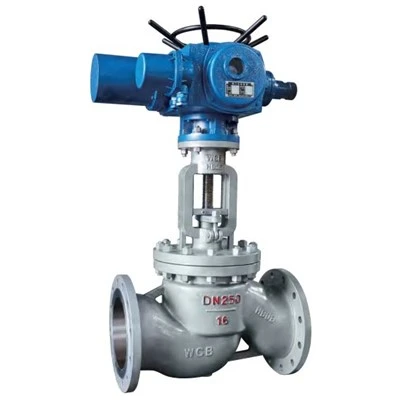
Now, a few mistakes I see all the time that you should avoid. First, don’t confuse working pressure with test pressure. When manufacturers test valves, they do a hydrostatic test at way higher pressure (usually 1.5 times the rated pressure) to make sure they hold up, but that test pressure isn’t the working pressure you should use for your system. Second, don’t forget about service factors for special applications. If your line handles cyclic pressure (like a system that starts and stops daily) or involves high-cycle operation (hundreds of pressure swings a day), you might need a higher rating than the calculation suggests, because fatigue can weaken the valve over time. Third, exotic materials: if you’re using something like alloy 20 or Inconel, their pressure ratings will be different than carbon steel or stainless, so always check the material-specific table.
Safety Valve As a gate valve supplier, I always tell customers that the “right” pressure rating is a balance of safety, cost, and application. Picking a too-low rating is a risk, but picking a way higher rating than you need is wasting money— Class 600 valves are way more expensive than Class 150, so if you don’t need that extra headroom, it’s not necessary. Last year, a municipal water department came to us after they bought overpriced Class 600 gate valves for their 125 PSI line. We helped them recalculate, and they switched to Class 150, saving them 40% on their valve order without any safety
Wenzhou Starry Valve Co., Ltd.
Wenzhou Starry Valve Co., Ltd. is one of the most professional gate valve manufacturers and suppliers in China, also supports customized service with low price. Please feel free to buy the newest gate valve made in China here from our factory. Welcome to contact us for pricelist.
Address: No.4900, 3rd Road, Binhai Industrial Park, Wenzhou Economic & Technological Development Zone, Wenzhou City
E-mail: starryvalves@163.com
WebSite: https://www.starryvalves.com/
