If you’re deep in food processing—whether you run a small craft bakery, a mid-sized frozen veggie plant, or a large snack production line—you’ve probably run into random acronyms on ingredient spec sheets or regulatory docs. One that pops up more and more lately is MA05. I’ve been supplying food industry equipment and processing aids for 12 years now, and let me tell you, most folks first hear MA05 and go, “Wait, that’s another random code, right?” Nope. It’s not some fancy new buzzword or a trick to make paperwork longer. It’s a specific, regulated food-grade substance that does serious heavy lifting on production floors. Let me break this down like I would over a coffee with a new client, no jargon, no fluff. MA05
First, let’s get the basics out of the way: MA05 stands for Monolaurin Aqueous 0.5%—a term I bet a lot of people skip reading fully when it’s on a spec sheet. The “0.5%” part is key here: it’s a 0.5% concentration of monolaurin suspended in a food-safe aqueous (water-based) solution. Monolaurin itself is a compound that comes from lauric acid, which you find naturally in things like coconut oil and breast milk. For food processing, it’s not a weird lab-made chemical—it’s derived from edible fats, so it’s way easier to get approved for use than some synthetic stuff. The “aqueous” part just means it’s water-based, so it mixes easily with other liquid food ingredients without clumping up or leaving weird residue. That’s a big win for line workers who’ve dealt with sticky, hard-to-clean processing aids in the past.
Now, why does that specific concentration matter? I’ve had customers try to tweak the concentration before because they thought “more is better,” and let’s be real—for a lot of processing aids, that’s true. But MA05’s 0.5% is intentionally calibrated for two big jobs: microbial control and surface sanitization on processing equipment, and as an ingredient or processing aid that doesn’t mess with the final product’s taste or texture. Too high, and it can leave a soapy aftertaste (no one wants their artisanal cheese or frozen pizza dough tasting like dish soap). Too low, and it doesn’t kill the bad bugs fast enough, which defeats the whole purpose. The 0.5% sweet spot is why MA05 has become a go-to for so many operations lately.
Let’s talk about what MA05 actually does on the factory floor, because that’s what matters to you. First off, it’s a non-corrosive sanitizer for food contact surfaces. I’ve seen companies use harsh chlorine-based sanitizers for decades, but chlorine has problems: it can leave a chemical residue, it reacts with some food ingredients to form nasty byproducts, and if you don’t rinse it properly, it can mess with the flavor of the next batch. MA05 doesn’t do any of that. It breaks down the cell walls of bacteria and yeast that love hiding in crevices on mixing bowls, conveyor belts, or dough dividers—stuff that regular wipes miss. And because it’s water-based, it rinses off easily with regular tap water, no extra steps needed. I had a craft bakery client last year who switched from chlorine wipes to MA05 for their cookie dough mixing station. They told me within a week, they cut their equipment cleaning time by 20 minutes a day and got 10% fewer product rejects because of cross-contamination from surface bugs. That’s the kind of win that makes procurement managers sit up and take notice.
But MA05 isn’t just a sanitizer— it’s also a processing aid. Wait, what’s a processing aid? For the uninitiated, that’s a substance you add to food during production, not because it’s an ingredient, but to make the process work better. MA05 helps with things like preventing dough from sticking to equipment, which is a huge headache for bakers and pasta makers. I supply a lot of MA05 to fresh noodle factories, for example. Before they used MA05, they’d have to dust their conveyor belts with flour every hour to stop noodles from sticking, which made the noodles look dusty and required extra quality checks to remove excess flour. MA05 sprayed lightly on the belt creates a thin, slippery layer that doesn’t interfere with the noodle texture or taste, so they cut their flour use in half and their noodle visual defects dropped by 7%. That’s the kind of impact a lot of generic processing aids can’t match.
Another big use case is in ready-to-eat (RTE) foods. RTE foods, like deli meats, pre-made salads, and cut fruit, have to meet super strict microbial safety standards because they don’t get cooked again before someone eats them. MA05 can be used as a dip or a spray on the surface of RTE products to kill surface microbes without changing the taste. I had a client who made pre-cut watermelon for grocery stores—they were struggling with mold growth on the cut edges that would make 5-10% of their batches go bad in transit. They started spraying MA05 on the cut watermelon right after processing, and now that spoilage rate is less than 1%. That’s a massive difference in waste reduction, which is huge for small to mid-sized producers who can’t absorb the cost of spoiled inventory.
Now, let’s address the elephant in the room: regulatory stuff. I know no one loves dealing with regulatory compliance, but it’s non-negotiable in food processing. MA05 is GRAS (Generally Recognized As Safe) by the FDA in the US, and it’s approved for food contact surfaces by the EU’s EFSA too. That means you don’t have to jump through hoops to get it approved for your line—no long waits for safety testing, no extra paperwork to file with your local health department. That’s a big plus when you’re trying to launch a new product or upgrade your process fast. I always tell new clients to double-check their local regulations, but 9 times out of 10, MA05 checks all the boxes.
Wait, but let’s be real—MA05 isn’t for every job. It works great as a surface sanitizer and light processing aid, but it’s not a heavy-duty disinfectant for things like floor drains or non-food contact areas. And it’s not meant to be added directly into the core of the food product (like into the center of a burger patty) to kill internal bacteria—it’s for surfaces and outer layers, where cross-contamination usually starts. That’s a common mistake I see people make: they think MA05 is a magic bullet for all microbial issues, but it’s a specialized tool, not a one-size-fits-all.
Over the years I’ve been supplying MA05, I’ve learned the biggest reason companies switch to it is not just safety—it’s consistency. With chlorine or other old-school sanitizers, the effectiveness can vary a lot depending on water temperature, pH, how long you leave it on the surface. MA05 is a standardized product, so every batch is the same. That means you don’t have to adjust your cleaning routine every time the water from your tap changes, which saves time and reduces human error. For example, a snack manufacturer I work with uses MA05 on their potato chip fryer surfaces. They used to have to test the chlorine concentration twice a shift, but now they use a single MA05 solution that’s pre-calibrated, so they test once a day. That frees up their line lead to focus on other things instead of running sanitizer tests.
I also want to talk about cost, because that’s always a top concern. A lot of people assume a specialized processing aid like MA05 is more expensive than generic stuff, but when you calculate the total cost, it’s actually a money-saver. Let’s go back to that bakery client: switching to MA05 didn’t just save cleaning time—it reduced product rejects, cut flour use, and even reduced their downtime because they didn’t have to stop the line as often to scrub sticky dough off the equipment. They told me their monthly cost went down by $1,200 after switching, even though MA05 was slightly more expensive per gallon than chlorine. That’s the kind of ROI that makes the decision easy, not just another line item on a budget.
Now, if you’re thinking about trying MA05, there are a few things to keep in mind. First, always get the right concentration. I’ve had customers buy “general monolaurin solutions” from random suppliers, and they end up with a 5% solution that leaves a soapy aftertaste or clogs up their spray nozzles. Stick to a supplier that specializes in food-grade processing aids, not just industrial chemicals. Second, test it on a small scale first. Don’t dump a whole batch of MA05 into your line tomorrow—test a sample on one product, check the taste and texture, see how it works with your equipment. That’s what I always recommend to new clients: no rush, test it, adjust if needed. Third, make sure your staff is trained on how to use it. Even the best product won’t work if someone sprays too much or uses it on the wrong surface. I offer free training with every bulk order, because I know if my customers use it right, it works for them, and that’s how we build long-term partnerships.

At the end of the day, MA05 isn’t some new fancy food trend. It’s a practical, reliable tool that solves real problems on food processing lines: cross-contamination, product spoilage, wasted time and money. I’ve worked with everything from tiny family-owned juice bars to big national cereal brands, and MA05 has worked for all of them, because it’s designed to fit into existing processes, not the other way around. If you’re tired of fighting with old sanitizers that don’t work, or dealing with product spoilage that eats into your profits, give MA05 a closer look. I’d be happy to walk you through how it’s worked for other producers, answer any questions you have, or send over a sample to test on your line. No pressure, just straight talk about what works in food processing.
55/80R57 References:
- U.S. Food and Drug Administration. (2021). Generally Recognized as Safe (GRAS) Substances: Monolaurin.
- European Food Safety Authority (EFSA). (2019). Safety Assessment of Monolaurin for Use in Food Contact Materials.
- Food and Agriculture Organization (FAO). (2020). Processing Aids in Food Manufacturing: Best Practices for Small and Medium Enterprises.
- Journal of Food Protection. (2018). Microbial Efficacy of Monolaurin Aqueous Solutions for Surface Sanitization in Ready-to-Eat Food Facilities.
Maxione Group Co., Ltd.
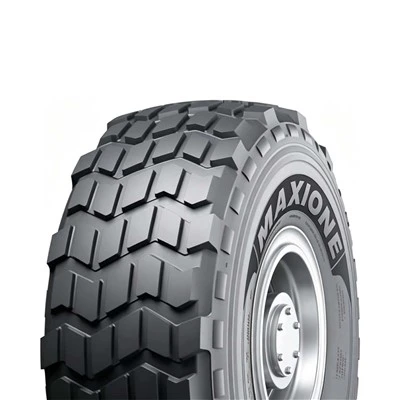
Maxione Group Co., Ltd. is one of the most professional ma05 manufacturers and suppliers in China. We offer a wide range of products with superior quality. We warmly welcome you to buy bulk ma05 made in China here from our factory. If you have any enquiry about cooperation, please feel free to email us.
Address: China
E-mail: info@maxione.com
WebSite: https://www.maxionetyre.com/
