If you’ve ever worked with copper parts—whether for electrical components, plumbing fixtures, heat exchangers, or custom decorative pieces—you know turning is the backbone of shaping this versatile metal into precise, functional forms. As a copper turning supplier who’s spent 12 years on the shop floor, I’ve lost count of how many customers ask me: “Hot turning vs. cold turning—what actually matters for my project?” It’s not just a technical debate; it’s the difference between a part that holds up to 10 years of high-temperature industrial use and one that cracks after a month, or between avoiding costly tool replacement and burning through blades every shift. Today, I’m breaking down the real science behind both methods, the pros and cons, and how to pick the right one for your needs. Copper Turning
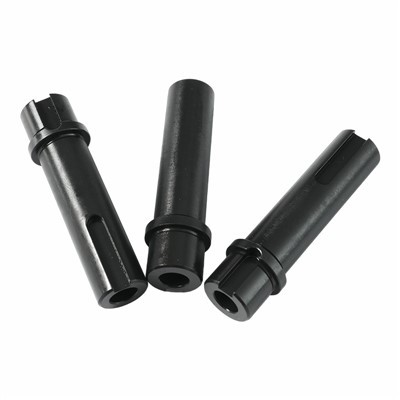
First, let’s start with the basics: turning is a machining process where a cutting tool removes material from a rotating workpiece to create cylindrical, conical, or flat shapes. Copper, in its pure form (like C11000 electrolytic tough pitch copper, the workhorse of our industry) or alloyed variants (C26000 brass-copper alloy for hardware), has unique properties that make its response to heat during turning non-negotiable. Pure copper, for example, is soft (about 35 on the Brinell hardness scale for annealed C11000), ductile, and highly thermally conductive—all traits that make it great for heat sinks but tricky to machine without the right technique.
What Is Hot Turning Copper, Anyway?
Hot turning (sometimes called warm turning, depending on temperature range) involves heating the copper workpiece to a temperature above its recrystallization point before or during machining. For pure copper, the recrystallization temperature is roughly 200°C (392°F), which is way lower than many people assume—you’re not talking about melting copper (which happens at 1085°C, 1985°F) here, just softening its internal structure to make material removal easier.
We heat our workpieces using three main methods, depending on part size and complexity: induction heating for small, high-volume parts (like electrical terminal pins), gas torches for larger custom components (such as heat exchanger shells), and resistance heating for thin-walled copper tubes. The goal isn’t to warp or damage the material—it’s to relieve the internal stresses that build up in cold-formed copper and reduce its yield strength enough that the cutting tool doesn’t have to fight as hard.
Here’s where the science gets practical: when you machine cold copper, its ductility causes it to form “built-up edge” (BUE)—a tiny lump of copper that welds itself to the cutting tool’s tip mid-turn. BUE is a nightmare because it creates uneven cuts, dulls tools in a fraction of their usual life, and leaves rough, inconsistent surface finishes. Hot working copper reduces ductility slightly (we’re talking a 10-15% drop in elongation at break) but increases its machinability rating by almost 30% according to ISO 3685 standards, which measure how easy a material is to machine.
What Is Cold Turning Copper, and When Do We Use It?
Cold turning is the traditional method: machining copper at room temperature, without intentional pre-heating. For small, simple parts, this works great—no extra heating equipment, shorter setup times, and lower energy costs. Most residential plumbing fittings, small electrical connectors, and decorative copper fixtures are made this way because their tolerances aren’t ultra-precise, and their volume is high enough to offset the cost of faster tool changes for BUE.
But here’s the catch with cold turning copper: its softness means it deforms under the cutting tool’s pressure instead of being cleanly sheared off. I’ve seen first-time customers try to machine a 1-inch diameter annealed copper rod cold, only to end up with a part that’s oval instead of perfectly round, because the tool’s force pushed the soft metal out of shape mid-spindle rotation. Cold turning also generates more heat from friction between the tool and the workpiece at the cutting edge—up to 300°C in some cases—even though we’re not heating the part on purpose. That incidental heat can cause work hardening in the immediate machined layer, leaving the surface brittle and prone to cracking when exposed to temperature fluctuations later.
The Key Differences: Hardness, Tool Life, Surface Quality, and Dimensional Stability
Let’s get concrete with the metrics that matter for every buyer, not just engineers. Over the years, I’ve tracked these differences across 5,000+ turning jobs, so these are real-world numbers, not textbook jargon.
-
Hardness of the Finished Part
Cold turned copper parts have a surface hardness that’s 15-20% higher than the core material, thanks to work hardening from the cutting tool. That might sound like a good thing, but it means the surface is more prone to fatigue cracking under cyclic loads (like heat exchangers that heat and cool 100 times a day). Hot turned copper parts have a uniform hardness across the entire workpiece (within 5 Brinell points of the original material) because the heat relieves internal stresses. For parts that will be exposed to vibration or temperature swings, this uniform hardness is a huge win for longevity. -
Tool Life
This is the biggest cost driver for buyers, and it’s where hot turning shines. In cold turning, BUE forms every 2-5 minutes, so tools (usually carbide inserts) need to be changed every 100-200 parts. In hot turning, the softer material doesn’t weld to the tool, so tool life jumps to 800-1,200 parts per insert. Last year, a customer doing 100,000 electrical terminal pins for an EV manufacturer switched from cold to hot turning and cut their tool costs by 75%—a difference that made the 5% higher per-part material cost totally worth it. The only exception: cold turning works better for very thin-walled parts (under 1mm thick) because hot heating can cause slight warping, though modern induction heating has minimized this issue for thin stock in the last 5 years. -
Surface Finish
Surface finish is measured in Ra (roughness average), and it’s critical for parts like heat sinks that rely on smooth surfaces for heat transfer, or connectors that need good electrical conductivity. Cold turned copper has an average Ra of 1.6-3.2 μm, because BUE creates tiny, uneven lumps on the surface. Hot turned copper has an Ra of 0.4-0.8 μm, which is smooth enough to reduce heat transfer resistance by 10-15% per ASTM C177 thermal conductivity tests. That’s a big deal for HVAC manufacturers, where even a small efficiency gain translates to lower energy bills for end users. -
Dimensional Stability
Cold turned parts often have dimensional drift (variation in diameter along the length) because the tool deforms the soft copper as it cuts. For a 1-foot long copper rod, that drift can be up to 0.02mm—enough to make it impossible to fit into a tight assembly. Hot turning’s uniform material hardness reduces that drift to less than 0.005mm, which meets the strict tolerances required for aerospace and medical copper components. A customer making surgical tool handles switched to hot turning last year because their cold turned parts were failing fit checks 12% of the time; now that number’s down to 0.5%.
Common Misconceptions I See All the Time
I hear the same myths from new customers, so let’s bust them. First: “Hot turning means melting the copper.” No—we keep the workpiece at 200-400°C, just above recrystallization but way below melting. If we got it hotter, we’d lose precision, but our process monitors temperature with infrared sensors to make sure it’s consistent every time. Second: “Hot turning is always more expensive.” For low-volume, custom parts, yes—heating adds setup time. But for high-volume jobs (10,000+ parts), the tool savings and lower scrap rate (we have a 98% yield for hot turning vs. 92% for cold turning) make it cheaper in the long run. Third: “Cold turning is better for decorative parts because it looks shinier.” Actually, hot turning parts have a brighter, more uniform finish because the BUE and work hardening from cold turning create a dull, uneven surface. I’ve had two decorative lighting clients tell me their hot turned copper fixtures sell 30% faster than the cold turned ones they used to make.
How We Adjust Our Process for Different Copper Grades
It’s not one-size-fits-all—we tailor hot and cold turning to the copper alloy you’re using. For pure C11000 copper (the most common for thermal parts), we use hot turning because its high ductility makes BUE a major issue. For C26000 brass-copper alloy (harder than pure copper, used for hardware), cold turning works just fine because it’s less ductile and doesn’t form BUE as easily. For specialty copper alloys like C70600 copper-nickel (used in marine parts), we use hot turning because it has higher recrystallization temperature, so we heat it to 450°C to soften it enough for clean cuts.
When to Reach Out to Us for Your Copper Turning Needs
At the end of the day, the choice between hot and cold turning comes down to your part’s application, volume, and tolerance requirements. If you’re making high-volume, tight-tolerance industrial parts (heat exchangers, electrical connectors, aerospace components), hot turning is the way to go. If you’re making small, low-volume decorative parts or simple plumbing fittings where cost is the top priority, cold turning will work.
I’ve worked with hundreds of clients over the years—from startups building EV components to large OEMs making medical devices—and I can tell you the worst mistake is guessing which method to use, then dealing with part failures or cost overruns down the line. That’s why we offer free, no-obligation part testing: send us a sample drawing or a small batch of your copper stock, and we’ll run both hot and cold turning trials, give you a detailed breakdown of tool life, yield, and part performance, and help you pick the best method for your project.

If you’re tired of inconsistent copper turning, high tool costs, or parts that fail prematurely, let’s connect. We’ll walk you through every step of the process, answer your questions about hot vs. cold turning, and make sure your parts meet your exact specs, no matter how big or small your order is.
References
Copper Turning ASM International. (2020). Machining of Copper Alloys. ASM Handbook, Volume 16: Machining.
International Organization for Standardization. (2012). ISO 3685: Machine Tools – Test Conditions for the Evaluation of the Performance of Turning Tools.
ASTM International. (2019). ASTM C177: Standard Test Method for Steady-State Thermal Transmission Properties by Means of the Guarded Hot Plate Apparatus.
Huizhou Quanyi Precision Hardware Products Co., Ltd.
We’re well-known as one of the leading copper turning manufacturers and suppliers in China, featured by quality products and good service. Please rest assured to buy customized copper turning made in China here from our factory. Contact us for more details.
Address: Building A10, 7th Floor, Zhongchuangyingke 5G Industrial Park, Zhonghan Industrial Park, Tonghu Town, Huizhou City
E-mail: info@qycncturning.com
WebSite: https://www.qycncturning.com/
