Hey everyone, and welcome back to my little corner of the industrial metal world. I’m Jake, been running this titanium round bar supply gig for almost 10 years now, and let me tell you—one of the most common questions I get from new clients (and even some repeat ones) is: “What’s the standard grade for titanium round bar?” It’s such a good question, because if you’re ordering titanium for the first time, all those grade numbers (like Grade 2, Grade 5) can feel like just random codes, right? No need to stress—today I’m breaking this down like I would over a coffee at the shop floor, no stuffy engineering jargon that makes your eyes glaze over. Titanium Round Bar
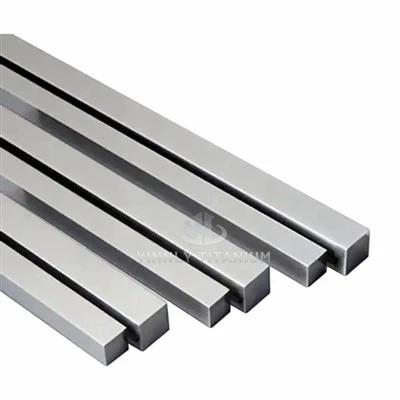
First off, let’s get one thing straight: “standard grade” isn’t some universal, set-in-stone label. It depends on what you’re using the bar for. But over the years, I’ve seen two grades pop up more than any others for general-purpose, go-to uses—Grade 2 and Grade 5 Titanium. Let’s start with the one that’s the workhorse, because that’s the first thing people reach for.
Grade 2 Titanium—you might also hear it called “commercially pure (CP) titanium Grade 2”—is hands down the standard for most everyday titanium round bar orders. Let’s talk numbers here, but keep it simple. CP titanium just means it’s not an alloy; it’s like 99% pure titanium, with tiny traces of iron, oxygen, and other elements that add a little strength without messing with its pure metal properties. Grade 2 is the most common of the CP grades (there’s Grade 1 which is softer, Grade 3 a little stronger, Grade 4 even stiffer, but Grade 2 is the sweet spot for most jobs).
Why is it the standard? Let’s run through its perks, because that’s what makes it go-to. First, it’s super corrosion-resistant. I’ve had clients use this bar for everything from chemical processing parts to marine fasteners, and even in food equipment—because it’s safe for contact with food and drinks, which is a huge plus for the food and beverage industry. Compare that to steel, which rusts like crazy if you leave it wet, or aluminum which gets corroded by certain acids, Grade 2 just holds up. Next, it’s ductile—meaning you can bend it, form it, machine it without it cracking on you. That’s why it’s perfect for things like heat exchangers, pump parts, and even custom fabrication work. And pricing? It’s way more affordable than alloy grades, which is why so many small businesses and startups start with Grade 2 before moving up to heavier-duty stuff.
Now, don’t get me wrong—Grade 2 isn’t for every job. If you’re making parts that need to handle really high stress or extreme temperatures, you’ll want something stronger. That’s where Grade 5 Titanium comes in, which is technically the other standard grade, just for higher-performance applications. Grade 5 is an alloy—specifically, titanium with 6% aluminum and 4% vanadium, which is why you might see it written as Ti-6Al-4V. It’s way stronger than Grade 2—like, twice as strong in some cases—without losing too much of that corrosion resistance. So why isn’t it the overall standard? It’s pricier, and it’s a bit harder to machine, so it’s overkill for jobs that just need basic titanium.
Let’s put this into real-life examples, because that’s how my clients get it. If a guy calls me up and says he needs round bar to make brackets for a boat’s deck, or parts for a medical device that doesn’t need super high strength, or components for a small chemical plant’s piping? 9 times out of 10, I ask if he wants Grade 2, and that’s his answer. But if another client is an aerospace engineer making turbine parts that spin at super high speeds, or a bike frame manufacturer who wants lightweight but tough bars, or a company making deep-sea parts that need to withstand extreme pressure? Then we go with Grade 5. It’s all about matching the grade to the job, but Grade 2 is the default, go-to standard for most orders.
Wait, but let’s make sure I’m not missing something. Are there other grades that sometimes get called standard? Yeah, Grade 9 Titanium is another one, often a mix of Grade 2 and Grade 5 properties—It’s an alloy with 3% aluminum and 2.5% vanadium, so it’s stronger than Grade 2 but cheaper than Grade 5, and super ductile for things like aerospace fasteners or pipelines. But it’s more of a niche standard, used when you need a middle ground, not the all-around standard like Grade 2.
Now, let’s talk about what “standard” actually means in the supply world, because that’s my side of things. When a client says “standard grade titanium round bar,” what they’re really saying is they want the grade that’s in stock, easy to get, meets all the common industry specs, and doesn’t require a custom order. Grade 2 is 90% of what I keep in stock at any time—various diameters, from 1/8 inch up to 12 inches, all cut to length to what the customer needs. That’s why it’s the standard. If someone orders Grade 5, I might have it in stock too, but sometimes I have to order a little more because it’s not ordered as often for basic jobs.
Let’s also bust a few myths here, because I hear these all the time. First, titanium is super expensive—yes, compared to steel or aluminum, but Grade 2 is way more budget-friendly than people think, especially for the value you get. Second, it’s impossible to machine—no, if you take your time (it’s a bit softer than steel, actually) and use the right tools, it’s totally doable, which is why it’s so popular for custom work. Third, all titanium grades are the same—nope, as I said, Grade 1 is super soft, Grade 5 is tough, mixing them up will get you parts that fail, so always confirm the grade with your supplier.
Another thing that’s important: industry standards. Grade 2 and Grade 5 aren’t just made up—they meet ASTM standards, which are the global specs for metal products. That means when you order Grade 2 round bar from a reliable supplier like me, you know it’s got the right amount of purity, strength, and corrosion resistance, no cutting corners. For example, ASTM B348 is the standard specification for titanium and titanium alloy bars for industrial applications, and Grade 2 and Grade 5 are the two most common grades listed under that spec. That’s why engineers and procurement teams default to these two when they need a standard grade.
Now, let’s get practical for anyone looking to order. If you’re new to titanium, here’s a quick cheat sheet for when someone asks for the standard grade: start with Grade 2 if your parts are for general use, corrosion resistance is key, and you don’t need extreme strength. Move to Grade 5 only if you’re working in aerospace, medical implants (wait, actually—wait a second, medical Grade 5 is a thing, right? Yeah, Grade 5 is often used for orthopedic implants because it’s biocompatible, which is why that’s another big use case), or high-stress applications like racing parts.
I’ve had so many clients come to me after trying to source titanium from somewhere else, confused because they got a bar that was too soft for their job, or too expensive. The biggest mistake I see is picking the wrong grade because you don’t know the standard. That’s why I always take a minute to ask a few quick questions when someone reaches out: what’s the part going to be used for? What environment will it be in? Do you need it to handle high stress or temperatures? That helps point them to the right standard grade, no guesswork.
Wait, let’s mention a specific example from my own shop to make this real. Last month, a small construction company called me because they needed round bar to make handrail brackets for a new waterfront apartment building. They were originally going to use stainless steel, but they heard titanium is more corrosion-resistant for salt air. I asked if they needed the brackets to hold heavy loads, and they said no—just standard handrails. So I recommended Grade 2, cut them exactly to the length they needed, and placed the order within 2 days. A week later, they texted me saying the brackets were perfect, no rust, and they were way happier than if they’d used steel. That’s exactly what Grade 2 is for—standard, reliable, gets the job done.
Another client, a local bike customizer, called me a few weeks ago for round bar to make the frame for a high-end road bike. He said he wanted it lightweight but super tough, so I suggested Grade 5. We had it in stock, he picked it up the next day, and he sent me a photo a month later of the finished bike—looks amazing, and he said it’s way stiffer than his old aluminum frame. That’s Grade 5, the standard grade for high-performance jobs.
Now, what about if you need something in between? Like a client who makes deep-sea fishing lines’ heavy-duty swivels. They needed something stronger than Grade 2 but not as expensive as Grade 5, so we went with Grade 9, which is becoming more of a secondary standard for those middle-ground jobs. But the core standard is still Grade 2, with Grade 5 as the secondary performance standard.
Let’s also talk about quality, because that’s what matters when you’re ordering metal. A lot of cheap titanium out there is actually low-grade CP titanium, not meeting ASTM specs. That’s why working with a reliable supplier is key. When I say Grade 2, I mean Grade 2 that meets ASTM B348, not some knockoff that’s 95% pure titanium and has too much iron in it. That’s why I always test every batch I get, to make sure it’s up to par. The standard grade isn’t just a number—it’s a guarantee that the metal will perform as it’s supposed to.
So to wrap this all up, if you’re ever stuck asking “what’s the standard grade for titanium round bar?” the short answer is: Grade 2 for general, everyday use, Grade 5 for high-performance, high-stress use. Grade 2 is the workhorse, the most stocked, the most affordable, and the default that 8 out of 10 clients will need. It’s the standard because it fits more jobs than any other grade, meets all the industry specs, and is what every reliable supplier keeps on hand for quick orders.

If you’re looking to place an order, or just have more questions about which grade is right for your project, hit me up. No pressure, no sales pitch, just straight talk about titanium round bar. We can chat about what you’re making, what environment the parts will be in, and I’ll point you to the right standard grade that fits your needs and budget. Don’t overcomplicate it—sometimes the simplest answer is the best, and that’s Grade 2 for most general titanium round bar jobs.
Titanium Hex Bar References:
ASTM B348, Standard Specification for Titanium and Titanium Alloy Bars and Billets, ASTM International, West Conshohocken, PA.
"Understanding Titanium Grades: A Guide to CP Titanium and Titanium Alloys", Metal Supermarkets.
"Titanium Round Bar: Grade Selection and Common Applications", IndustryWeek.
Baoji Yinnly Titanium Co., Ltd.
Baoji Yinnly Titanium Co., Ltd. is one of the most professional titanium round bar manufacturers and suppliers in China, featured by quality products and good service. Please rest assured to buy bulk titanium round bar in stock here and get quotation from our factory. Customized orders are welcome.
Address: Unit 902, Building 1, Creative Building, No.195, Gaoxin Avenue, High-tech Zone, Baoji City, Shaanxi Province
E-mail: anna@yinnlyti.com
WebSite: https://www.yinnlyti.com/
