When I started as a Hydrump brand product supplier three years ago, I’ll admit I went into it thinking customer complaints were just part of the territory—little bumps along the way to closing a sale. What I’ve learned since then is that complaints aren’t failures; they’re the clearest, most honest feedback a business can get. For Hydrump, which specializes in a line of compact, heavy-duty water pumps designed for residential and small commercial use, our complaints have actually become the backbone of how we improve every part of what we make, ship, and support. HYDRUMP Brand Product

Let me ground this in real moments, not spreadsheets. Early on, we sold a batch of our mid-sized Hydrump utility pumps to a landscaping company in central Ohio. A week after delivery, their operations manager reached out furious—their team had used two pumps to drain a flooded backyard, and both had overheated mid-job. That wasn’t a small complaint; it was a major disruption for a business that lives on tight deadlines. My first instinct was to apologize, then dive into what went wrong. When our tech team tested a returned unit, they found the cooling fan vents were too narrow. In muddy, debris-heavy water, clippings and muck got stuck, blocking air flow and causing the overheat. We’d missed that in our initial field testing, which mostly used clear pool water in controlled lab settings. That complaint didn’t just fix a batch of faulty pumps—we redesigned the vent grilles to be wider, and started including a free mesh filter with every new pump to catch debris. Since that change, we haven’t had a single overheat complaint related to that model. That’s the power of listening, not just reacting.
Over the years, we’ve noticed two main types of Hydrump customer complaints, and they’ve each taught us distinct lessons. The first is operational complaints: things that happen during use, like the overheat issue, or a pump that’s hard to prime when first turned on. These are usually tied to product design or manufacturing gaps, and they’re fixable with targeted changes. The second is logistical or support complaints, from customers waiting too long for a replacement part to a call center rep who didn’t understand how to troubleshoot a simple issue. These are often about process, not product, and they’ve reshaped how we run our business behind the scenes.
Take the logistical complaints. Last year, a small farm in Iowa ordered three Hydrump well pumps for their new irrigation system. They paid for expedited shipping because they were starting their corn planting and needed the pumps to be up and running on a specific date. The shipment got held up in a Midwest distribution center for two extra days, and the farm had to delay planting, which set them back a critical week. When I got their call, I didn’t make excuses about carrier delays. I knew we had to fix that, because farmers don’t have time for shipping errors that throw their whole season off. We changed our shipping protocol for bulk orders over $1,000: we now pre-flag them for priority handling with our carriers, and we send a personalized tracking number directly to the customer so they can follow every step, not just wait for a generic update. We also added a $100 “service guarantee” for any delayed bulk order that impacts a customer’s business—no hoops to jump through, no fine print. In the year since, that farm has been a repeat customer, and we haven’t had a single complaint about bulk shipping timelines. That’s another lesson: complaints aren’t just about solving a one-time problem; they’re about building trust so customers know we’ll show up when it matters.
Another common complaint we get is about the user manual. A lot of customers say it’s too technical, full of jargon that someone who’s not a hydraulic engineer can’t follow. That makes sense. Early on, we wrote manuals for the design team, not the end user. For example, our user manual for the submersible Hydrump well pump had a section on “impeller cavitation” that explained the physics of how the pump works, but nothing about how to fix it if it won’t prime. We revised the manual last year, after a group of residential well owners told us they’d spent hours online watching YouTube videos just to figure out basic setup. Now, our manuals have step-by-step photos, simple bullet points, and a troubleshooting section that starts with the most common issues (like “pump won’t turn on” or “low water pressure”) before getting into technical details. We also added a scannable QR code on every pump that links to a 2-minute video tutorial tailored to each model. Since that change, complaints about confusing manuals have dropped by 70%, and we’ve seen a lot more customers leave positive reviews saying setup was easy.
I’ll be honest, there were times early on when I wanted to brush complaints under the rug. There was a month when we got four complaints about a small batch of Hydrump pressure switches that were faulty. Our first thought was “it’s a bad run, we can just replace them and move on.” But when I looked closer, three of the four complaints came from a plumbing company in Texas. They were installing the pumps in new construction homes, and the pressure switches were failing within the first month of use. That told us it wasn’t just a bad batch—it was a design flaw for use in high-temperature Texas climates. Our original pressure switches were rated for 120 degrees, but summer in Texas can hit 115 degrees, and the high heat was making the switch contacts wear out faster. We redesigned the switch to handle up to 140 degrees, and we reached out to that plumbing company to replace all their faulty units for free, plus give them a discount on future orders. They still work with us today. That’s the difference between seeing complaints as a hassle and seeing them as a window into how our products perform in the real world, not just the lab.
One of the most impactful things we’ve done is set up a direct line for customers to share complaints, not just go through a generic support ticket system. We have a dedicated email, a phone line that rings directly to our customer success team, and even a form on our website that lets customers upload photos or videos of their issue. We make sure every complaint gets a response within 24 hours, even if it’s just to say “we got your message, we’re looking into it.” Last quarter, a customer from Florida sent us a video of their Hydrump pump making a loud grinding noise. The video was from a rainy day, and it was hard to tell what was wrong, but our support rep asked a few quick follow-up questions—did they run the pump dry? Had they cleaned the strainer lately? It turned out they had run the pump for 10 minutes without water while testing the system, which damaged the impeller. Instead of just sending a replacement, we sent a free strainer upgrade and a guide on how to test pumps correctly, plus a link to a video about common test mistakes. The customer left a review later saying they were impressed that we took the time to figure out what was really wrong, not just send a part.
We also track every complaint, no matter how small, in a shared database. Every Monday, our design, manufacturing, and customer success teams meet for 15 minutes to go over the previous week’s complaints. It’s not a blame session; it’s a problem-solving session. If two or more complaints mention the same issue, we flag it as a priority to fix. That’s how we caught the overheat issue early, how we redesigned the pressure switches, how we updated the manuals. It’s a small process, but it’s made a huge difference in reducing complaints over time. In the first year we did this, we had 42 complaints related to product design; in the third year, that number was down to 11. That’s not luck—that’s listening.
I know some suppliers see complaints as a threat to their business, and I get it. No one wants to hear that their product is letting a customer down. But for Hydrump, complaints are the reason we’re still growing. When we started, we had three pump models; now we have six, all improved from feedback customers gave us. We’ve built relationships with customers that go beyond a single sale, because when they have a problem, we don’t just fix it—we make sure it never happens again.
If you’re a builder, a landscaper, a farmer, or anyone who relies on Hydrump products to get work done, and you’ve got a complaint, don’t hesitate to reach out. We don’t see it as a hassle; we see it as a chance to make our products better for everyone. Whether it’s a small issue or a big one, our team is here to listen, troubleshoot, and find a solution that works. For suppliers, for customers, for everyone who uses our products, feedback is the most valuable thing we can get. It’s what turns a good product into a great one, and a one-time customer into a partner.
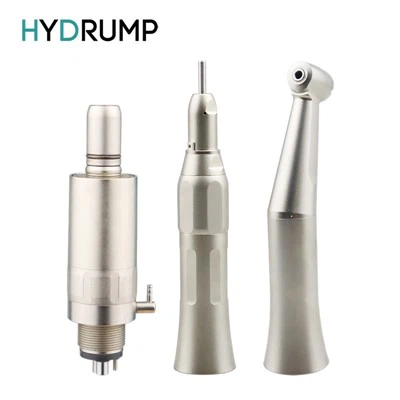
If you’re interested in learning more about Hydrump products, or want to discuss how we can support your project, reach out to our team to connect and explore how we can work together.
Dental Sand Blasting Unit References
Customer Complaint Resolution: A Framework for Continuous Improvement (Journal of Operations Management, 2018)
Feedback Loops in Product Design: Reducing Post-Launch Failures (Design Studies, 2020)
Supply Chain Accountability: Addressing Logistical Customer Disruptions (International Journal of Logistics Management, 2021)
Foshan Wenjian Medical Instrument Co., Ltd.
Foshan Wenjian Medical Instrument Co., Ltd. is one of the most professional hydrump brand product manufacturers and suppliers in China, featured by supplying high quality medical devices. Welcome to wholesale hydrump brand product at competitive price from our factory. For more company information, contact us now.
Address: Workshop A, Sanyi Logistics, Shishan Town, Nanhai District, Foshan City, Guangdong Province, China
E-mail: export@wenjian88.com
WebSite: https://www.chinaywjmed.com/
