If you’ve ever wandered around a busy factory floor—say, a snack plant cranking out granola bars, a car shop stamping metal parts for door handles, or a pharmaceutical lab prepping pills for packaging—you’ve probably passed machines that move materials, parts, or products from one work zone to another. Most people call these “conveyors,” but if you ask the folks who design, build, and use manufacturing equipment, you’ll hear a specific term for the ones that kick that whole process off: infeed machines. I’m a supplier of these machines, and I’ve spent years answering the same question from factory managers, line leads, and even new mechanics: “What the hell is an infeed machine actually for, and why does it matter so much?” Infeed Machine

Let’s cut the jargon for a second. Think of a manufacturing line like a chain. If one link breaks, the whole thing stops. The outfeed machine that takes finished parts to packaging, the press that shapes metal, and the assembly robots that put products together all work fast, but they can’t do their jobs right if the parts don’t show up on time, in the right spot, and in one piece. That’s where infeed machines earn their keep. They’re the first link in the chain. They take raw materials, semi-finished parts, or bulk products from storage, pallets, or hoppers, and deliver them to the next piece of equipment at a consistent, steady speed—no jams, no gaps, no random misalignments that bring the line screeching to a halt.
I’ve seen too many new factory managers write off infeed machines as “just another conveyor” until their line goes down for 3 hours because a pile of 10,000 plastic bottle caps got fed all at once, instead of one at a time, to a capping machine. Or until a stack of pre-cut cardboard boxes got tilted wrong, so a packaging robot couldn’t pick them up and filled 2,000 boxes with nothing. Those stops cost real money: downtime on a high-volume line can run $10,000 or more an hour, depending on what you’re making. So infeed machines aren’t just “material movers”—they’re the gatekeepers that keep the rest of the line running smoothly.
Now, let’s get specific about what they actually do, because “moving stuff” doesn’t cover the unique jobs that make an infeed different from any old conveyor. First, there’s feeding rate regulation. Some machines, like injection molders that make plastic toothbrushes, can spit out 50 parts a minute. If you dump all the toothbrush handles into a loose conveyor, they’ll bunch up, and 10 out of every minute will hit the molder too fast, causing a jam that breaks a $500 mold insert. A good infeed machine uses sensors and adjustable speed controls to space those handles out exactly one every 1.2 seconds, so the molder never gets overwhelmed. No jams, no broken tools, no wasted materials.
Then there’s alignment and orientation. This is where infeed machines earn their real respect. Let’s take something simple: pills. You can’t feed a pill into a blister pack if it’s upside down, right? Or a metal screw for a car seat can’t be fastened if it’s lying on its side instead of standing up. Infeed machines use things like vibratory bowls, air jets, or visual cameras (think of a cheap phone camera, but tough enough for a factory) to flip, spin, and nudge parts until they’re facing the right way. I remember a customer that makes disposable razors used to feed loose razors to their packaging line, and they had a 12% defect rate because half the razors were turned the wrong way. They swapped to a custom infeed machine we built, and that defect rate dropped to 0.2%—saving them $250,000 a year in wasted packaging and labor.
Another big job: handling different types of materials, not just hard parts. Let’s say you run a snack factory, making potato chips. You can’t feed a bag of chips into a sealing machine by dumping them loose—they’ll get crushed, or all the flavoring will rub off. A food-grade infeed machine uses soft, belted conveyors with adjustable grip, and even gentle air channels, to move chips from a fryer (super hot, so it needs heat-resistant parts) straight to the bagging line without breaking them. I work with a lot of food manufacturers, and they’ll tell you that infeed machines that aren’t made for food—no crevices where mold can grow, easy to sanitize—are a non-starter. The FDA won’t let you use them, and your product gets contaminated. It’s not just convenience; it’s regulation.
Wait, let’s also talk about bulk handling. If you’re making pre-cut produce for grocery stores, you might have a pallet of 50-pound cases of apples that need to get to a slicing machine. An infeed machine can lift that pallet (we use hydraulic lifts or electric ones, depending on the load) and then slowly feed the apples out one at a time, so the slicer doesn’t get flooded with 500 pounds of apples all at once. Without that infeed step, you’d have apples rolling around the floor, wasted produce, and a safety hazard for workers. A lot of people forget safety, but infeed machines also reduce manual lifting and handling—no more workers dragging heavy pallets, which cuts down on back injuries and workers’ comp claims.
Now, here’s the thing I don’t tell everyone in sales: not all infeed machines are the same. A one-size-fits-all conveyor won’t work for a car parts plant vs. a candle factory vs. a pharmaceutical lab. Let’s break down the common types, because that’s what trips most people up. There’s vibratory bowl infeeds, which are the ones you see in small manufacturing: little bowls that vibrate, spin parts around, and use ridges to line them up. They’re perfect for small, regular parts like screws, nuts, or battery terminals. Then there’s belt infeeds, which are flat or slanted, good for bulk items like boxes, bags, or fruit. We make these with food-grade, rubber, or metal belts, whatever the customer needs. Then there’s robotic infeeds—for big, irregular parts, like car bumpers or furniture pieces. These use small robot arms (the same kind you see on assembly lines) to pick parts from a pile, orient them, and feed them to the next machine. I worked with a furniture maker last year that used to have 3 workers manually picking 100 chair parts an hour; we installed a robotic infeed, and now it’s 1 worker overseeing the machine, 600 parts an hour, no injuries. That’s a game-changer for small factories that can’t afford a whole new line.
A lot of my clients come to me thinking they just need a faster conveyor. But what they actually need is an infeed machine that’s tailored to their specific product, line speed, and space. For example, if you have a small factory with a line that only runs 500 parts an hour, you don’t need a $50,000 robotic infeed—you just need a simple vibratory bowl with adjustable speed. But if you’re running a 24-hour high-volume line, that cheap infeed will break down every week, costing you way more in downtime than the right infeed would cost upfront. That’s why I always tell factory managers to look at total cost of ownership, not just the price tag.
Let me also clear up a common myth: infeed machines aren’t just for new lines. I’ve retrofitted hundreds of existing lines that were running fine, but they were wasting 15% of materials because of bad infeed. A customer that makes cereal bars called me last year, saying their line was losing $12,000 a month in wasted bars because the infeed machine was misaligning them, so the wrapper would cut through the bar. We swapped their old conveyor for a compact infeed machine with a camera alignment system, and within a month, their waste was down to 1%—a $10,000 monthly savings, minus the cost of the machine. That’s the kind of win that makes my job worth it.
Now, let’s talk about the stuff I don’t advertise on our website: the small, annoying details that make a good infeed machine. Like, does it have safety guards that are easy to remove for cleaning? Does it have emergency stops that workers can reach from both sides? Is it built with parts that are easy to replace—no custom screws that you have to wait 2 weeks for? I’ve used some cheap infeed machines that break down because the vibratory motor was too small, and the company won’t sell just the motor; you have to buy the whole $10,000 machine. That’s a rip-off. We build our infeeds with off-the-shelf parts where we can, so if something breaks, you can get a replacement in 24 hours, not 2 weeks. That’s the kind of stuff that matters when your line is down at 2 a.m. on a holiday.
I know a lot of people think “manufacturing technology” is all fancy robots and AI, but the infeed machine is the unsung hero. It’s the reason your phone’s battery fits right, your cereal bar is wrapped tight, your car’s door handle works when you pull it. Without a good infeed, none of that gets made efficiently, safely, or cheaply.
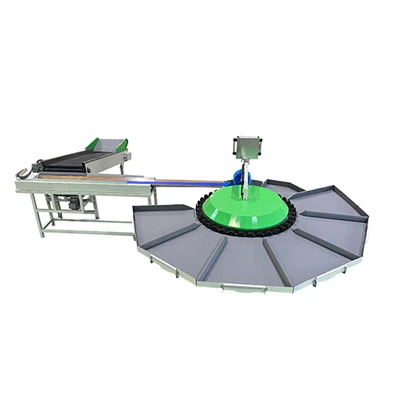
If you’re a factory manager, line lead, or maintenance tech reading this, and you’re dealing with frequent jams, high waste, or safety issues from your infeed, let’s chat. I can walk you through what type of infeed would work for your line, no sales pitch, no hard sell—just what I’ve learned from 10 years working with factories just like yours. We don’t do one-size-fits-all, and we don’t build machines that break down after a few months. We build infeeds that fit your line, save you money, and keep your workers safe.
Packing Machine If you’re ready to stop losing money to bad infeed, reach out to us to talk through your needs. We’ll send a free assessment of your line’s infeed performance, no strings attached.
- Groover, M.P. (2020). Fundamentals of Modern Manufacturing: Materials, Processes, and Systems. John Wiley & Sons.
- “Material Handling in Manufacturing: Infeed and Outfeed Systems.” Manufacturing Engineering Society International Conference (MESIC), 2021.
- Food and Drug Administration (FDA). “Current Good Manufacturing Practice (cGMP) for Food, 21 CFR Part 117.” U.S. Department of Health and Human Services, 2022.
- “Robotic Infeed Systems for High-Volume Manufacturing.” International Journal of Industrial Robotics, Vol. 48, No. 3, 2021, pp. 145-152.
- Occupational Safety and Health Administration (OSHA). “Workers’ Compensation and Manual Material Handling.” U.S. Department of Labor, 2020.
Zhengzhou First Industry Co., Ltd.
As one of the most professional infeed machine manufacturers in China, we also support customized service. With abundant experience, we warmly welcome you to buy cheap infeed machine from our factory. For price consultation, contact us.
Address: No.72,11th Floor, Building 11, No.283 West Third Ring Road, High-tech Industrial Development Zone, Zhengzhou City, Henan Province
E-mail: media@fruitprocess.com
WebSite: https://www.fstsort-machine.com/
